 English
 عربى
عربى Português
 Español
Picture a small kitchen counter with a toaster, kettle, and coffee maker already taking up space. You still want cold water in the summer and boiling water for tea. A desktop water dispenser can do both without turning the counter into a storage rack. It sits neatly beside the wine glasses or a knife block, and it draws less than a square half-meter of countertop. The practical point is that desktop dispensers fit where a floor-standing unit cannot: next to a sink, in an office alcove, on a bedroom shelf, or under a kitchen cabinet. They give you hot and cold water on demand without a major renovation.
What a Desktop Water Dispenser Does Differently
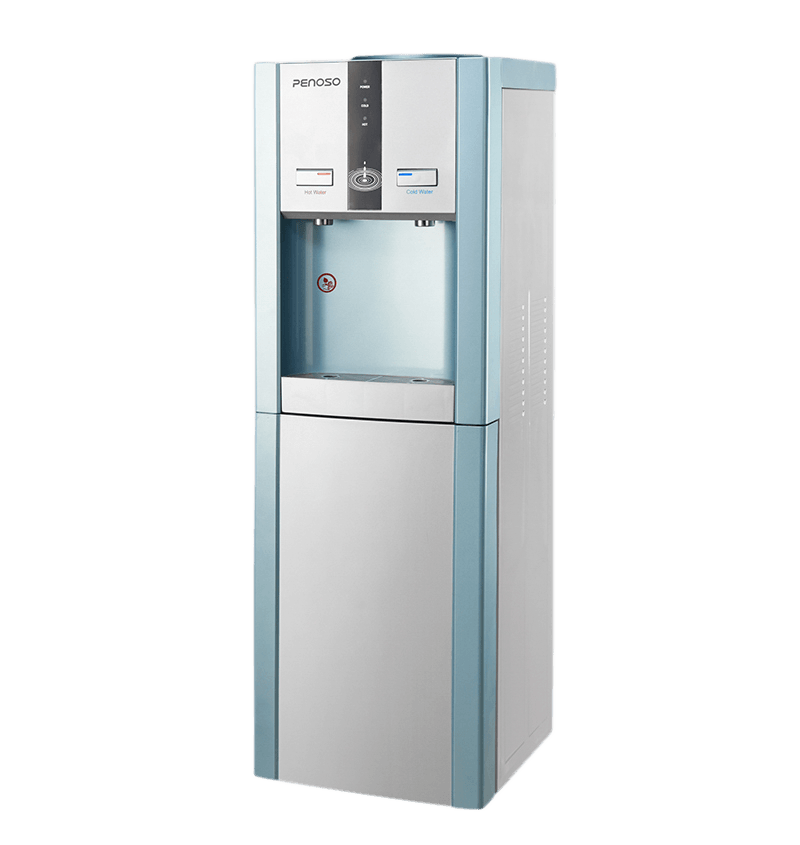
Desktop water dispensers put the same heating and cooling mechanisms used by larger water coolers into a frame roughly 30 to 45 cm wide, 40 to 50 cm deep, and 50 to 70 cm high. The main difference from floor models is the water tank size. A typical desktop bottle-loaded unit holds a 3-gallon bottle rather than a 5-gallon one, so you refill it more often. Direct-piped models avoid this by connecting to a tap water line. They are ideal for places with consistent access to water and a drain.
Because they are compact, desktop dispensers offer flexibility in placement. You can move them from the kitchen to the dining table when hosting guests, or position a direct-piped unit under a wall-mounted sink. If you are considering a model for a small room, look at our countertop water dispensers range. It gives you a clear idea of what fits in a standard 60 cm deep counter.
Types and Configurations
Desktop water dispensers are available in two supply configurations: bottle-loaded and direct-piped. Bottle-loaded models use pre-filled water bottles placed on top or behind the unit. They are extremely easy to set up. One person can install the bottle, connect the power, and start using the dispenser within minutes. They are a strong choice for renters, temporary offices, or anyone who does not want to alter plumbing.
Direct-piped models are connected to a cold water supply line. They do not require bottles, so you save storage space and eliminate bottle delivery. Many direct-piped models also include built-in filtration. The trade-off is installation, which may require a plumber if you do not already have a nearby tap with adequate pressure.
Most desktop dispensers provide two or three dispensing temperatures:
- Hot: 85-95°C (185-203°F), used for tea, instant coffee, or baby formula.
- Cold: 4-12°C (39-54°F), suitable for drinking and mixing.
- Room temperature: some models offer a third setting.
The table below summarizes the choice:
| Configuration | Water Source | Setup | Best For |
|---|---|---|---|
| Bottle-Loaded | Pre-filled bottle | No plumbing | Renters, small offices |
| Direct-Piped | Tap water line | Requires plumbing | Homes, permanent office use |
For a simple hot and cold setup, a compact countertop water dispenser gives you both temperatures in a small footprint. It is a practical way to start without investing in a direct-piped installation.
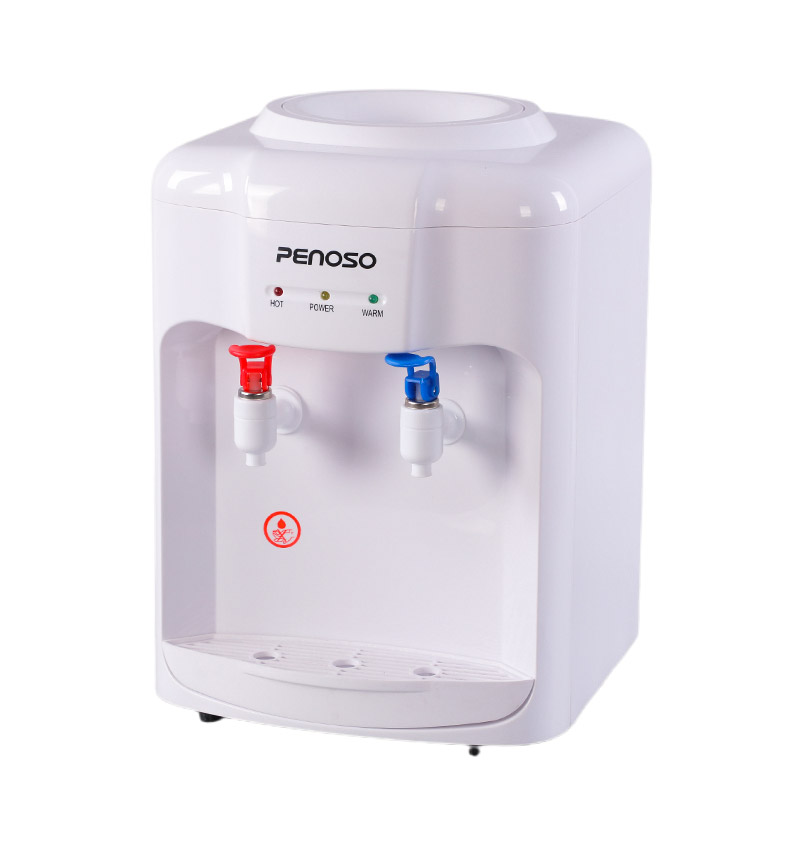
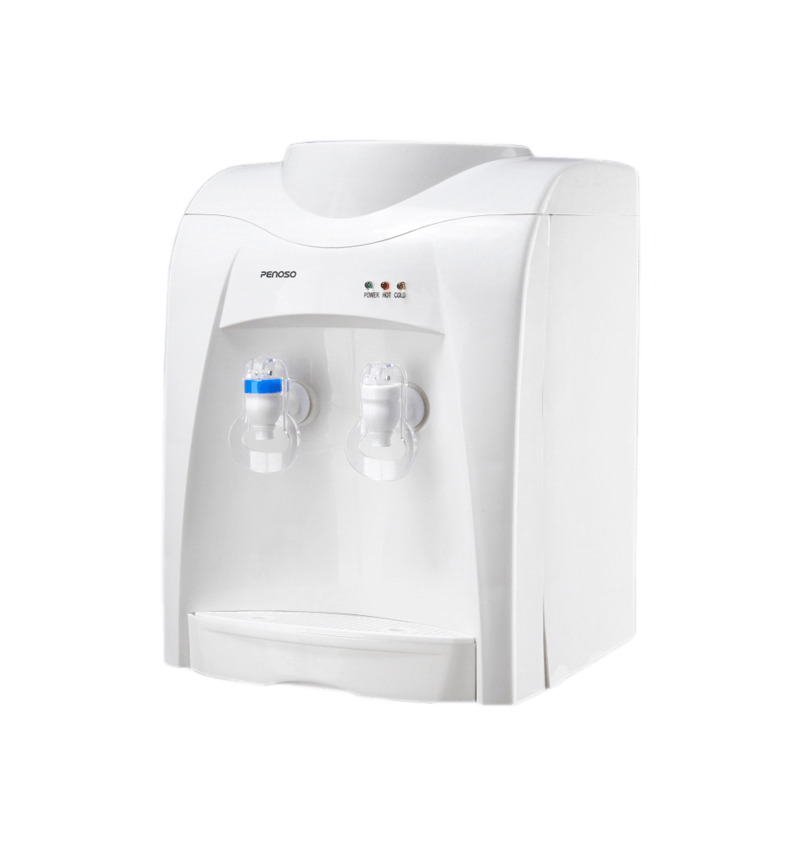 Compact Countertop Water Dispenser for Home Use with Hot and Cold WaterThis mini desktop dispenser provides hot and cold water in a small footprint, ideal for home use. Its stainless steel construction ensures durability, making it a practical choice for those starting with a bottle-loaded system.View Product →
Choosing the Right Desktop Water Dispenser
Choosing a desktop water dispenser requires four practical checks: space, heating and cooling capacity, safety, and filter options.
Measure the Space First
Before you buy, measure the area where the dispenser will live. Most kitchen countertops are 60 to 65 cm deep, and the standard office shelf is around 30 cm deep. A typical desktop dispenser fits within 40 cm depth, but always verify the product dimension. Also reserve 10-15 cm above the unit for bottle installation or ventilation. If you place the dispenser too close to the wall, the hot air from the compressor will not escape and the cooling performance drops.
Check Heating and Cooling Capacity
Heating wattage is your first signal. Cheap models use 350-500 W and warm water more slowly. Heavy-use units start at 550 W and can handle frequent refills. The cooling side is either compressor or thermoelectric. Compressor cooling is more powerful. It maintains cold water at 4-10°C even in a hot kitchen. Thermoelectric cooling is silent but is affected by ambient temperature. If the room gets above 30°C, a thermoelectric unit may only produce lukewarm water.
Inspect Safety Features
Look for a child lock on the hot tap, an overflow drip tray, and anti-dry burn protection. These cost very little but prevent expensive water damage and avoid burns. Some newer models add a safety cap on the hot water knob. When selecting a model for home use, a space-saving desktop water dispenser with a child lock is a good option for families with small children.
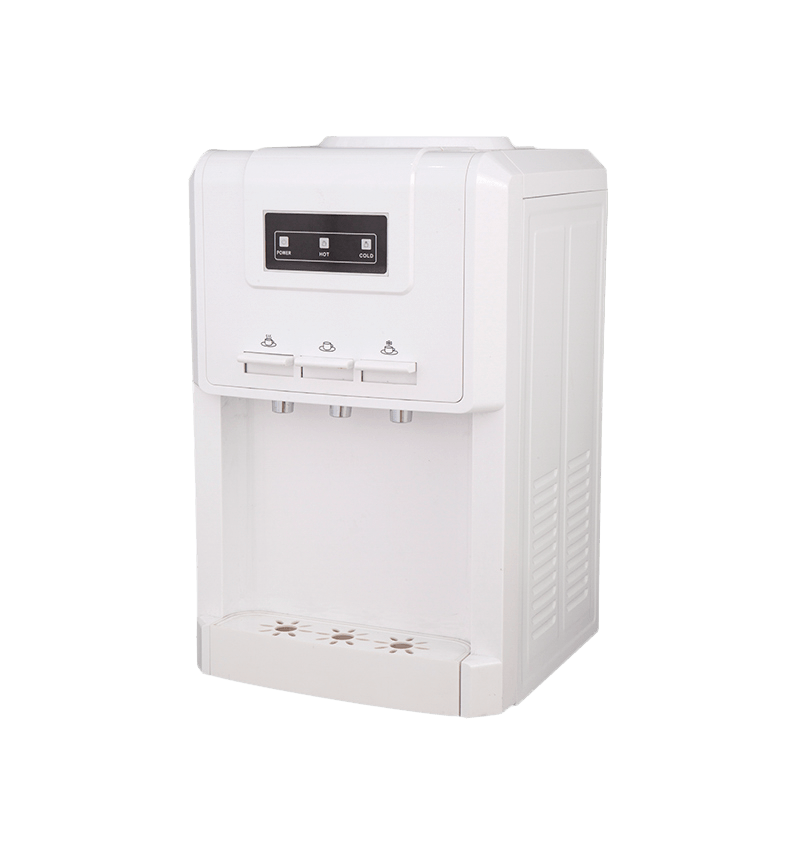
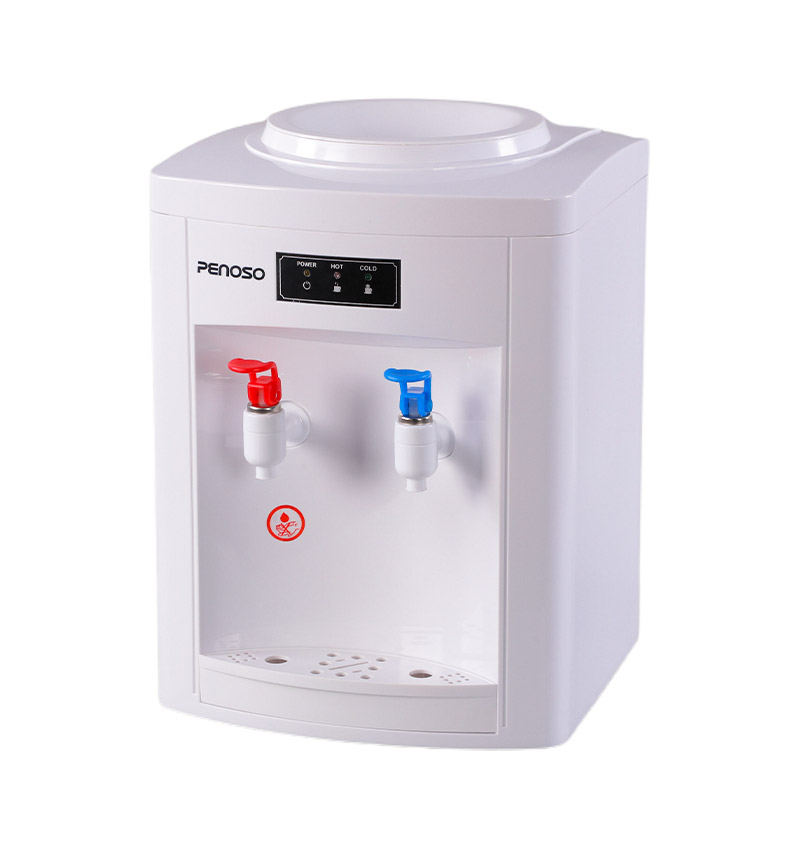 Mini Desktop Water Dispenser with Safety Features for FamiliesA space-saving desktop dispenser with child lock and safety cap, suitable for families with young children. It offers hot and cold water while preventing burns and water damage, fitting easily on counters or shelves.View Product →
Understand Filter Integration
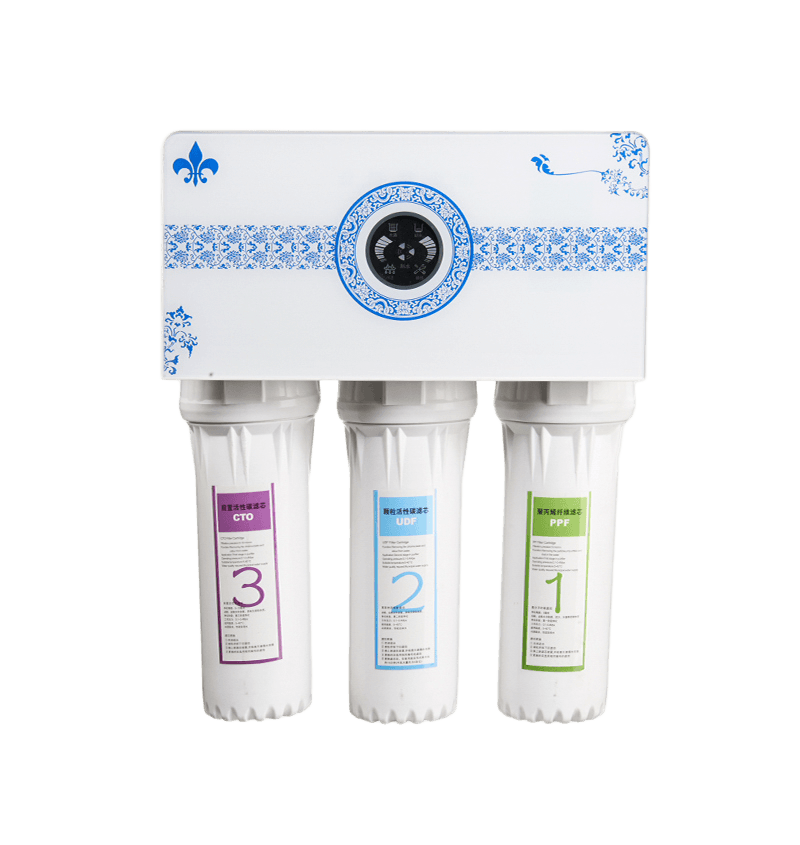
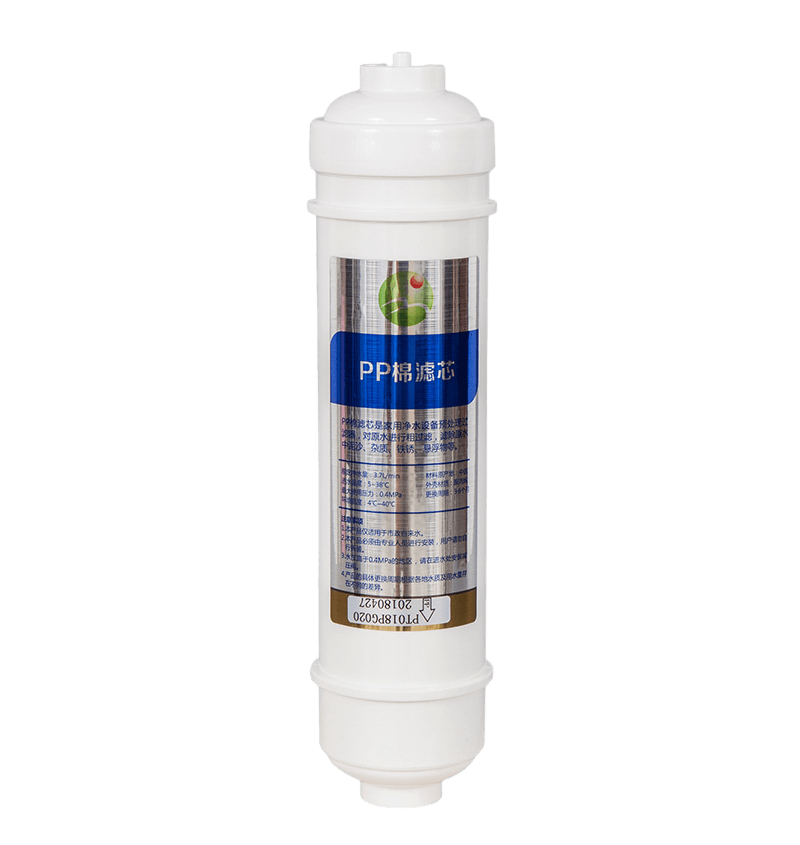
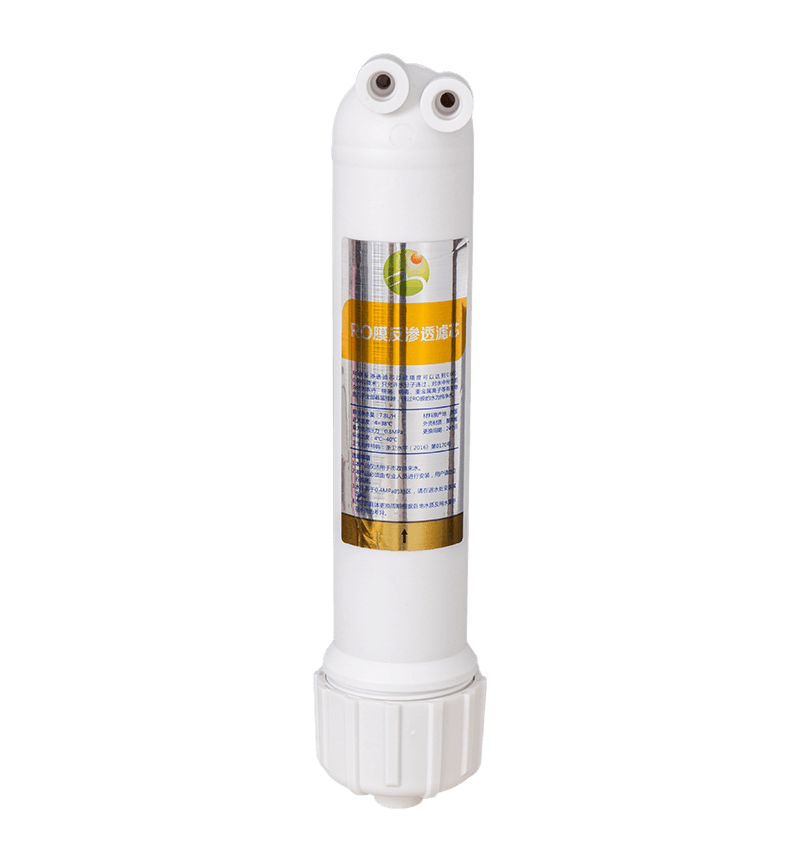
If you choose a direct-piped model, ask what the built-in filter handles. Basic sediment filters remove rust and dust. Activated carbon improves taste and odor. Reverse osmosis or ultrafiltration removes dissolved solids and bacteria. More stages mean a longer filter life, often 6 to 12 months. A desktop RO dispenser can be especially useful if your tap water has a high TDS level.
Where Desktop Dispensers Earn Their Place
Desktop dispensers are a strong match for specific settings where space is limited and usage is moderate.
- Small offices (5-15 people): One desktop dispenser with a 3-gallon bottle covers drip coffee and drinking water for about two days. If you do not want to buy bottles, a direct-piped version is a better operational choice.
- Home kitchens: A tabletop water dispenser can sit beside the sink and supply hot tea or cold water without becoming a permanent fixture.
- Bedrooms and study rooms: Compact models with a 1-liter tank are ideal for overnight hydration. Choose a quiet unit to avoid humming.
- Schools and waiting rooms: Direct-piped models with child locks provide clean water without the need for bottle storage.
The capacity question usually comes down to bottle change frequency. In a light-use setting, a 3-gallon bottle lasts about 2-3 days for one office worker or 1-2 days for a small team. For heavier use, a 5-gallon bottle-loaded model or a direct-piped system is better.
Maintenance Basics for Long Life
Regular maintenance keeps a desktop water dispenser hygienic and reliable. Plan on three tasks.
- Clean the tank and spout every month. Turn off power, remove the bottle, drain the remaining water, and clean the inner tank with a food-safe solution. For direct-piped models, clean the air intake and inlet filter at the same time.
- Replace the filter on schedule. A sediment or RO filter typically needs replacement every 3 to 6 months, while an RO membrane can last up to 12 months. Use only the specified filter; generic cartridges often have different flow rates and can shorten the membrane's life.
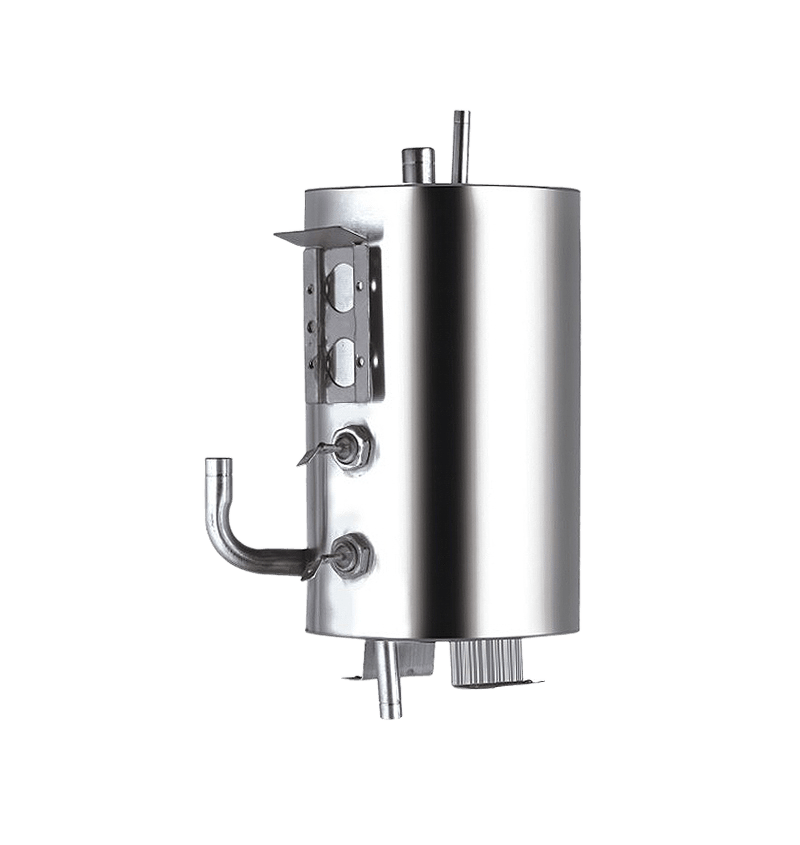
- Descale the heating element every 3 to 6 months, especially in hard water areas. Scale buildup slows heating and affects taste. A citric acid flush or vinegar solution works well. Rinse the system thoroughly after descaling.
When you store the unit for more than two weeks, drain all water and keep it dry. This prevents mold and stale odors. A unit with a removable drip tray and wide opening is easier to clean. For everyday hot and cold convenience, a tabletop water dispenser with hot and cold water pairs easily with your standard cleaning routine.
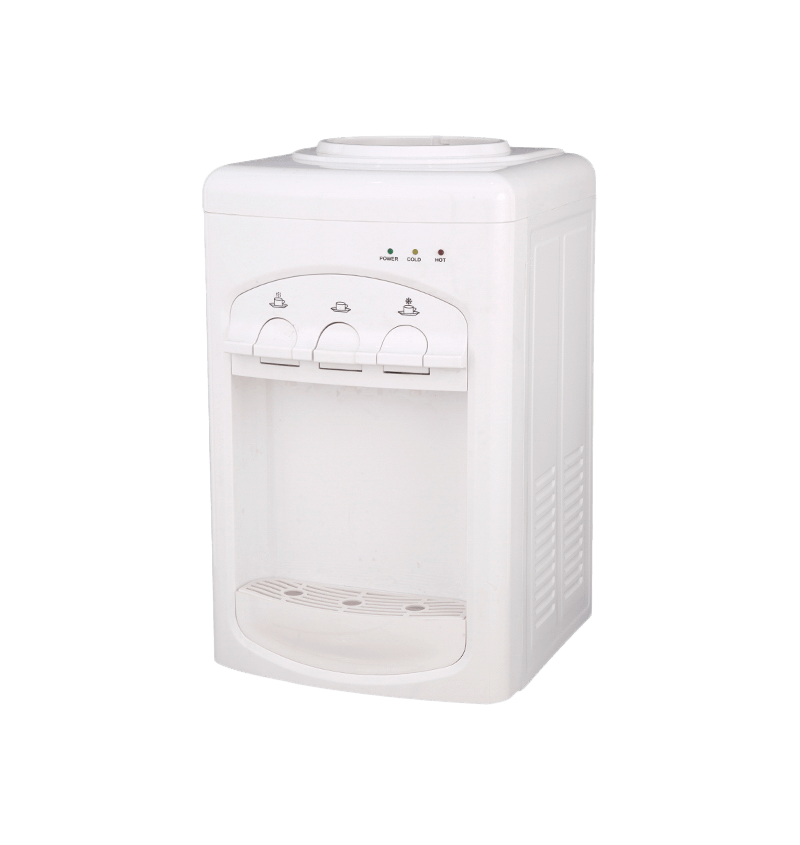 Tabletop Hot and Cold Water Dispenser with Stainless Steel BuildThis tabletop unit delivers hot, cold, and warm water with a stainless steel body. It is easy to clean and maintain, making it a convenient option for offices or kitchens where a floor-standing cooler is too large.View Product →
Conclusion
Desktop water dispensers give you the convenience of hot and cold water in a compact unit that fits on a counter, shelf, or table. When you choose an appropriate model, measure your available space, confirm the heating and cooling capacity meets your usage, and review safety features if children are around. Desktop units are particularly useful in offices, kitchens, and bedrooms where a floor-standing cooler is too large. For most users, a simple bottle-loaded unit is enough to start, while a direct-piped model with filtration is a great upgrade if you have plumbing access and prefer to avoid bottles.