 English
 عربى
 Português
 Español
Put a standard 5-gallon plastic water jug on a scale, and the needle usually stops between 43 and 46 pounds (19.5 to 20.9 kg). The water alone accounts for about 41.7 pounds (18.9 kg) at room temperature. The rest is the bottle, cap, handle, and the small difference between a nominal 5-gallon fill and a jug filled to its neck.
That distinction matters if you are lifting the jug onto a cooler, loading a delivery van, or checking whether a shelf can hold a row of full containers. The short answer is simple, but the full-jug weight is the number most people actually need.
The short answer: 41.7 pounds of water, 43-46 pounds full
In US customary units, one gallon of water weighs about 8.34 pounds at roughly 62°F. Multiply that by five and you get 41.7 pounds. In metric terms, that is about 18.9 kilograms. A typical empty polycarbonate water jug adds 2.5 to 3.5 pounds, plus a cap and handle, so a full jug lands around 44 to 45 pounds.
You will sometimes see 40 pounds used as a round number for a 5-gallon jug. That figure is close to the water weight alone and understates a full container. If the question is "how heavy is a 5 gallon jug of water," ask whether the person means the water or the whole jug. For planning purposes, use the full weight.
Why the jug weighs more than the water
The container is not weightless. A standard 5-gallon polycarbonate water bottle weighs roughly 2.5 to 3.5 pounds empty. Some lighter PET jugs are closer to 2.2 pounds, while heavy-duty reusable bottles can be heavier. A glass carboy is in a different class altogether, often 15 to 20 pounds empty before any water goes in.
There is also the fill question. A "5-gallon" cooler jug usually has a fill line, and the actual volume can differ slightly from the nominal rating. A 5-gallon bucket is another example: it may hold 5 gallons at the brim, but most people fill it below the rim. If you need a reliable number for shipping or lifting, weigh the filled container once rather than relying on the label.
Temperature, minerals, and gallon definitions
Water density changes with temperature, but the effect is small. A gallon at about 39°F weighs around 8.345 pounds, while a gallon near 100°F weighs about 8.29 pounds. Across 5 gallons, that is only a few tenths of a pound. Dissolved minerals can add a little more weight. Seawater, for example, weighs about 8.56 pounds per gallon, so 5 gallons would be around 42.8 pounds before the container.
The bigger source of confusion is the gallon itself. A US gallon of water weighs about 8.34 pounds. An imperial gallon weighs about 10.02 pounds, so 5 imperial gallons of water weigh about 50.1 pounds. If a jug is labeled in imperial gallons, the full container can be closer to 53 pounds. Always check whether the label uses US or imperial measure.
Weight comparison at a glance
The table below compares common 5-gallon containers. The bar column is a visual guide, with each mark representing roughly 2 pounds of full weight.
| Container | Water weight | Typical empty weight | Typical full weight | Relative load |
|---|---|---|---|---|
| Standard plastic 5-gallon jug | 41.7 lb (18.9 kg) | 2.5-3.5 lb | 44.2-45.2 lb (20.0-20.5 kg) | ||||||||||||||||||||| |
| 5-gallon plastic bucket | 41.7 lb (18.9 kg) | 1.5-2.5 lb | 43.2-44.2 lb (19.6-20.1 kg) | ||||||||||||||||||||| |
| Glass carboy | 41.7 lb (18.9 kg) | 15-20 lb | 56.7-61.7 lb (25.7-28.0 kg) | ||||||||||||||||||||||||||||| |
| 5 imperial gallons, plastic | 50.1 lb (22.7 kg) | 2.5-3.5 lb | 52.6-53.6 lb (23.9-24.3 kg) | |||||||||||||||||||||||||| |
What this means when lifting and loading
A 44-pound jug is manageable for many adults, but it is awkward. Water shifts inside the container, the handle may be off-center, and the jug has to clear the rim of a cooler. Lifting 44 pounds from the floor to waist height is one task. Pressing it above shoulder height onto a top-loading dispenser is another, and that is where strain and spills become more likely.
For top-loading models, check the collar, drip tray, and stability of the cabinet before filling. A purpose-built bottled-water dispenser with a secure top seat reduces the chance of a tipped jug and a flooded floor.
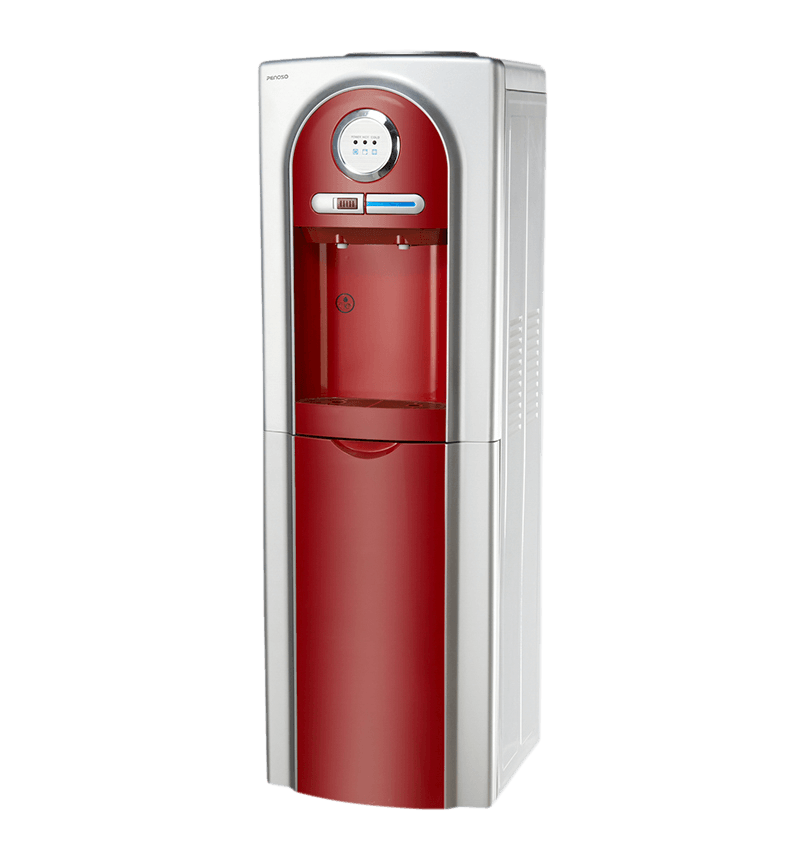
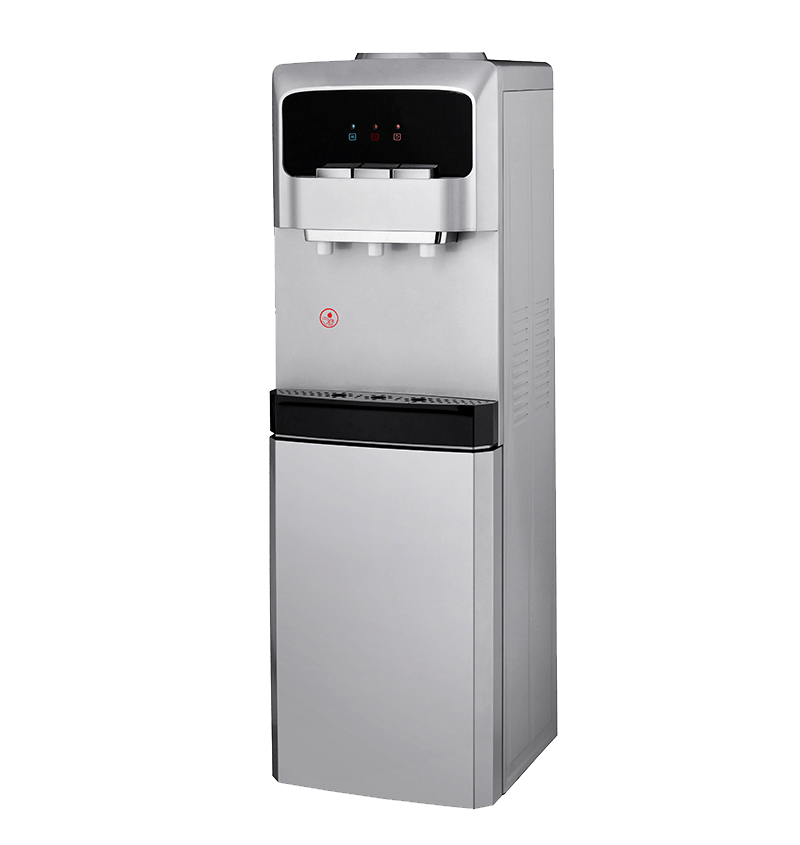
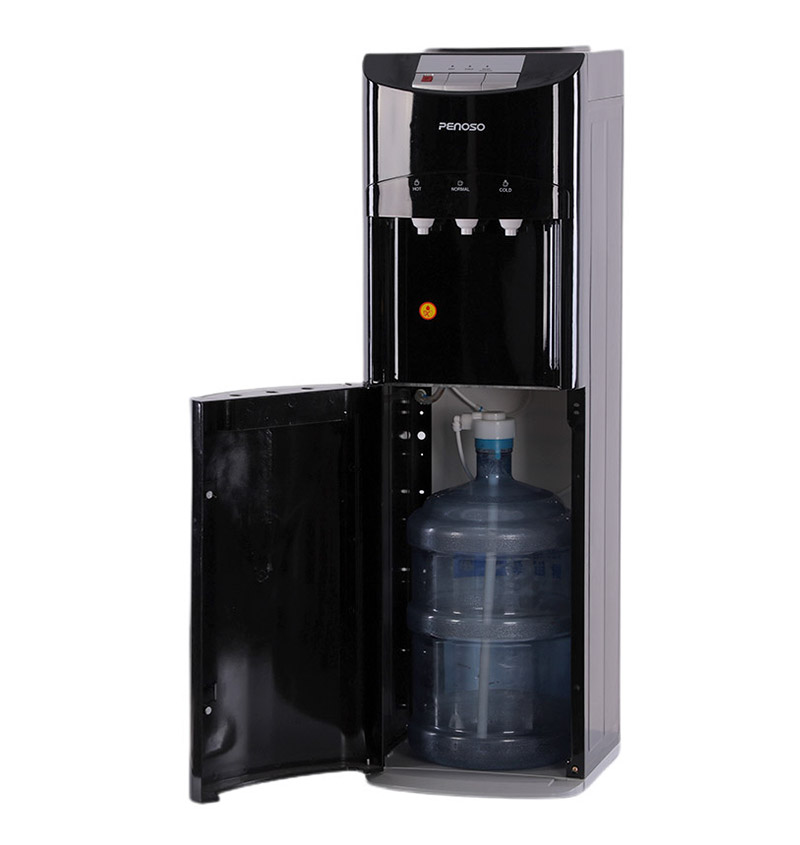 Self-Cleaning Bottom-Loading Water Dispenser with Three TemperaturesBottom-loading design avoids overhead lifting, with self-cleaning function and hot, cold, and normal water settings for households where changing jugs safely matters.View Product →
If the jug still has to be raised overhead, use two hands, keep the load close, and avoid twisting. For homes with older users or anyone with shoulder problems, compare bottom-loading dispensers, which keep the jug at the base of the cabinet and remove the overhead lift.
Choosing a dispenser around the weight
If you use 5-gallon jugs, the dispenser design matters as much as the water weight. Bottom-loading units reduce the lift height, but they still require the jug to be moved and seated. Top-loading units are simple and common, but they concentrate the load at shoulder height during every changeover. Direct-piped dispensers avoid the 43-46 pound jug entirely by connecting to a water line and filtering on demand.
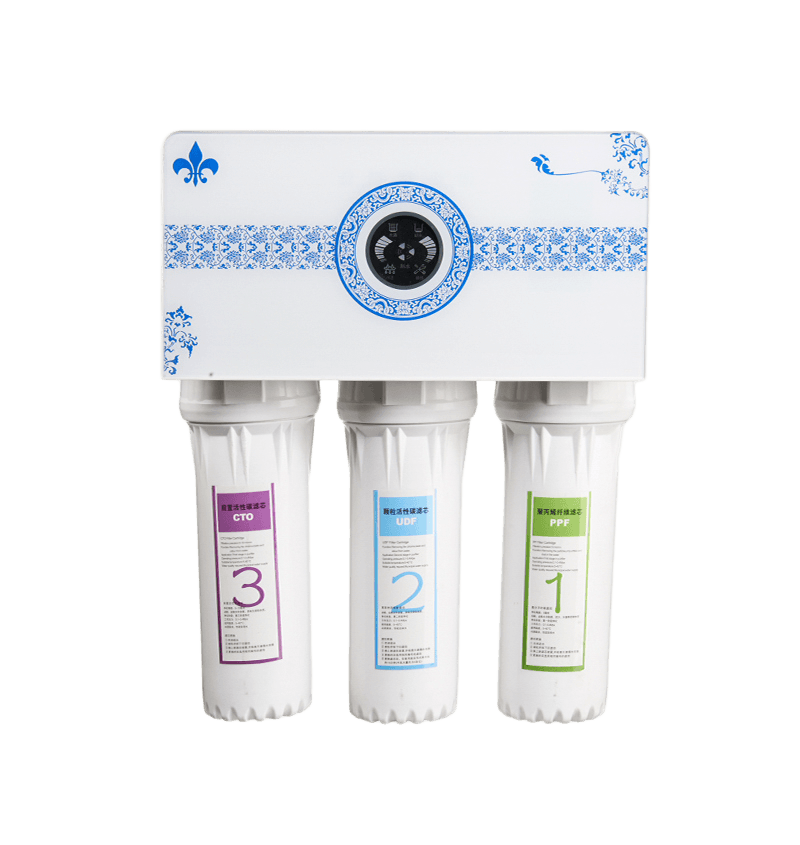
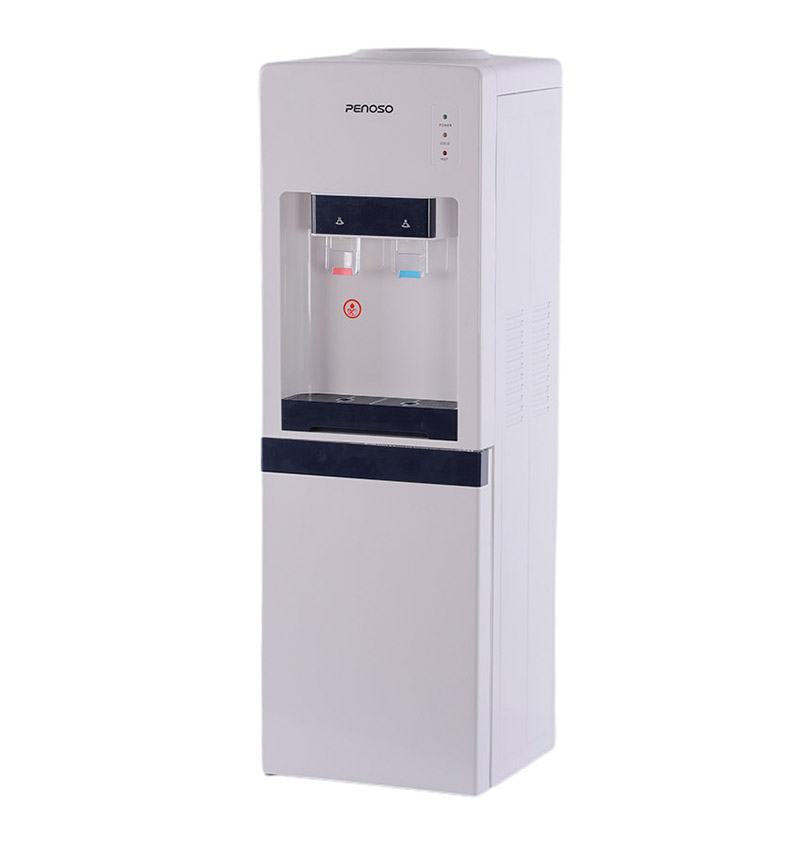 Pipeline Water Dispenser with RO/UF FiltrationA hot-and-cold dispenser that connects to a water line and filters on demand, avoiding the need to lift and seat heavy 5-gallon jugs.View Product →
Countertop dispensers are another option for small offices and homes where a full 5-gallon jug would dominate the room. These units usually work with a smaller bottle or a direct line, so check the water source before assuming they will accept a standard cooler jug.
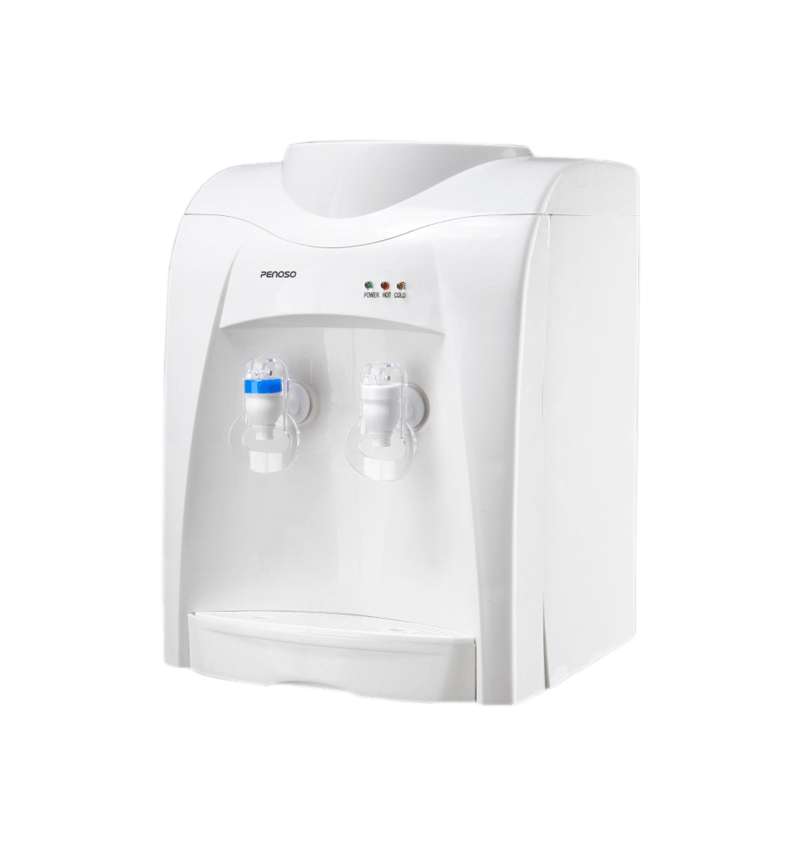
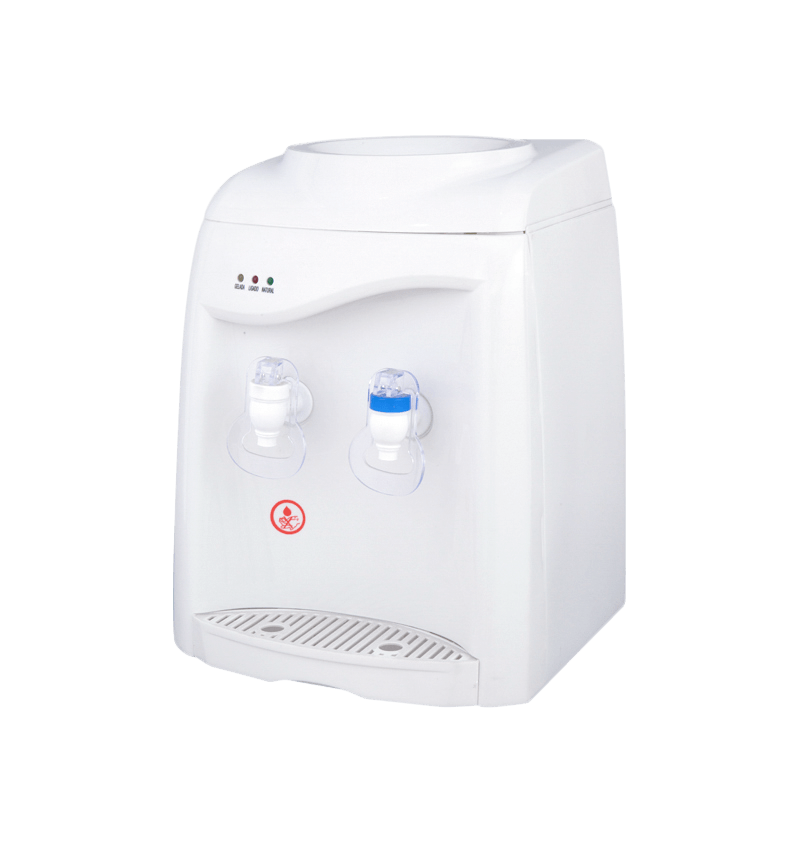
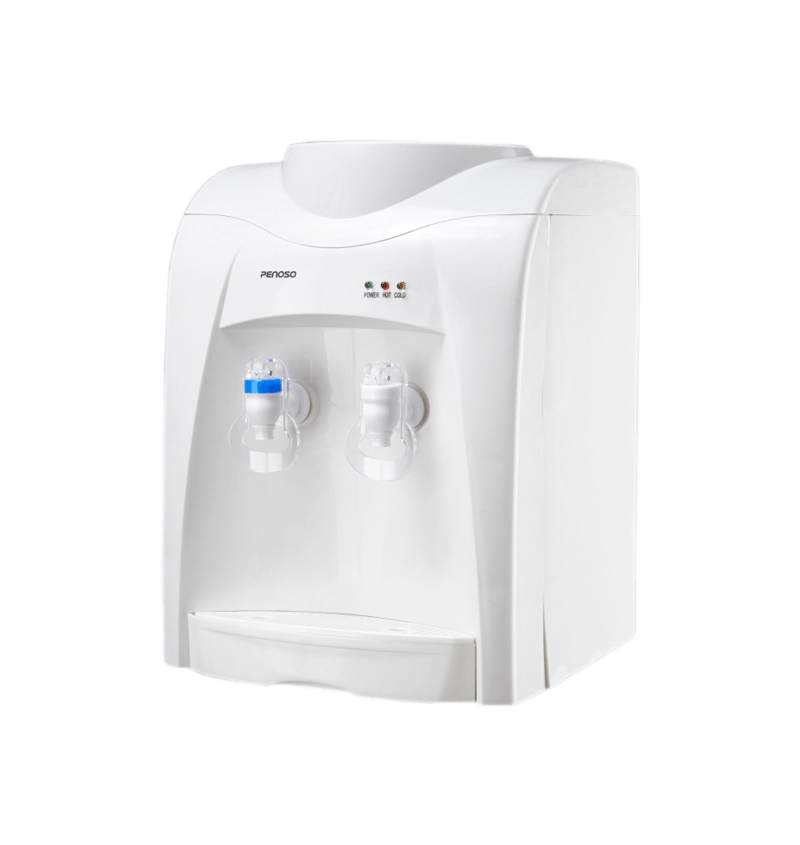 Mini Desktop Water Dispenser for Home Hot and ColdCompact desktop cooler for hot and cold water, suited to small homes or offices where a full 5-gallon jug would take up too much room.View Product →
For shared spaces, commercial water dispensers should be matched to the delivery method, the number of users, and the floor space available for jug storage. A dispenser rated for frequent use is not automatically rated for a heavier glass carboy, so confirm the container type.
Transport, storage, and floor load
Ten full plastic jugs weigh roughly 440 to 450 pounds, plus the pallet or cart. That is enough to affect vehicle payload, elevator limits, and the way a delivery route is planned. A hand truck rated for 500 pounds is a better choice than carrying two jugs by hand up a flight of stairs.
Floor load is usually less of an issue than the point load on a shelf. A single 44-pound jug resting on a small base is not the same as three stacked jugs on a thin shelf. Keep full jugs on a low, stable surface, and avoid stacking them above shoulder height. In hot weather, plastic jugs can become softer and less rigid, so inspect handles and caps before lifting.
Practical checklist before you fill or buy
- Decide whether you need the water-only weight or the full-jug weight. Water alone is about 41.7 pounds; a full plastic jug is usually 43-46 pounds.
- Check the container material. Glass carboys can push a full 5-gallon load past 55 pounds.
- Confirm US versus imperial gallons. Five imperial gallons of water weigh about 50.1 pounds before the container.
- Measure the lift height. A 44-pound jug is easier to slide onto a cart than to raise onto a top-loading cooler.
- Use a cart or dolly for multiple jugs, and keep full containers low and stable during storage.
The number to remember is 41.7 pounds for the water and roughly 44-45 pounds for a typical full plastic jug. If the jug is glass, imperial, or filled to the brim, expect closer to 50-60 pounds. Weigh your own jug once; it takes a minute and gives you a real number for delivery, storage, and dispenser planning.