 English
 عربى
عربى Português
 Español
Choosing the right drinking water infrastructure for high-traffic commercial spaces, corporate offices, and premium residential properties fundamentally impacts operational efficiency, long-term costs, and workplace wellness. A pipeline water dispenser—which connects directly to a building's main water supply to provide an uninterrupted flow of filtered water—offers the most efficient, hygienic, and cost-effective alternative to traditional bottled water coolers.
Direct Utility vs. Bottled Logistics
The fundamental difference between these two systems lies in their operational architecture. Traditional bottled water systems rely entirely on a complex supply chain involving manufacturing, plastic molding, vehicular transportation, and physical storage. This creates a continuous cycle of ordering, receiving, and lifting heavy 5-gallon (approximately 18.9-liter) jugs.
Conversely, a pipeline water dispenser functions as a localized purification plant. By tapping directly into the existing municipal water line, it eliminates the need for physical inventory management. For facility managers overseeing large square footage, this translates to reclaimed real estate that would otherwise be dedicated to storing full and empty water crates.
Financial Architecture and Return on Investment
While the initial acquisition and installation cost of a high-capacity pipeline water dispenser is generally higher than purchasing a basic bottled water stand, the operational expenditure curves diverge rapidly over time. Bottled water costs remain linear or scale upward with consumption, whereas a mains-fed system operates on a fixed-cost model regardless of volume.
Consider a corporate office with 150 employees. On average, an employee consumes about 1.2 liters of water per day. Over a standard working month (22 days), the total consumption reaches nearly 4,000 liters. The following data highlights the financial variance between the two setups over a 12-month period:
| Cost Component | Traditional Bottled Water Service | Point-of-Use Pipeline Water Dispenser |
|---|---|---|
| Initial Equipment & Installation | Low ($100 - $300 per dispenser unit) | Moderate to High ($800 - $2,500 including filtration) |
| Monthly Consumables / Water Supply | High ($7 - $11 per 5-gallon bottle; approx. $1,400/month) | Negligible (Standard municipal water rates; approx. $20/month) |
| Routine Maintenance & Sanitization | Variable (Often bundled, but requires manual labor) | Fixed ($150 - $300 per year for certified filter changes) |
| Estimated Year 1 Total Expenditure | $17,000 - $18,500 | $1,500 - $3,500 |
| Estimated Year 2+ Annual Expenditure | $16,800+ (Subject to inflation and delivery fees) | $200 - $500 (Filter replacements and water usage) |
Hygiene, Microplastics, and Contamination Risk
Sanitation protocols represent a critical point of comparison for high-value properties focused on health compliance. Bottled water coolers feature an open-reservoir design. Every time a heavy bottle is inverted and placed onto the dispenser, ambient air—along with any airborne dust, bacteria, or pathogens present in the room—is drawn directly into the internal water tank to equalize pressure. Furthermore, human contact with the bottle neck during replacement introduces a known vector for cross-contamination.
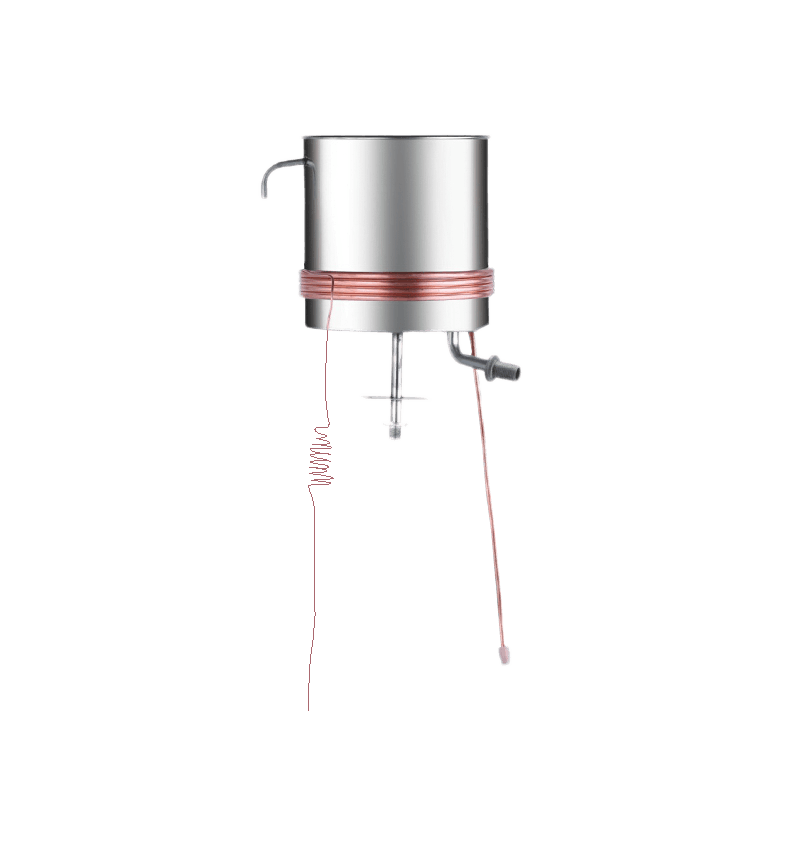
A pipeline water dispenser utilizes a completely sealed, pressurized purification pathway. Water moves seamlessly from the copper or PEX supply lines through multi-stage filtration matrices and into sealed stainless steel holding tanks. Advanced configurations integrate localized Ultraviolet-C (UV-C) LEDs directly at the point of dispense, ensuring that the water is sterilized milliseconds before it enters a glass, neutralizing up to 99.99% of bacteria and viruses without altering the taste profile.
Moreover, recent spectroscopic studies have highlighted the prevalence of microplastics in bottled water, often resulting from the friction of capping mechanisms and degradation of polyethylene terephthalate (PET) or polycarbonate containers under fluctuating storage temperatures. Implementing a direct-line system bypasses plastic storage entirely, mitigating long-term exposure risks to these particulate compounds.
Advanced Filtration Paradigms for Premium Water Quality
A primary objection to utilizing municipal supply lines centers on regional variance in tap water quality, taste, and hardness. To achieve parity with or exceed the purity of premium bottled springs, commercial pipeline water dispenser units leverage highly sophisticated, multi-tiered filtration arrays tailored to specific water chemistries:
- Sediment Pre-filtration: Utilizes spun polypropylene membranes graded at 1 to 5 microns to intercept suspended solids, rust flakes from aging municipal infrastructure, and microparticulates.
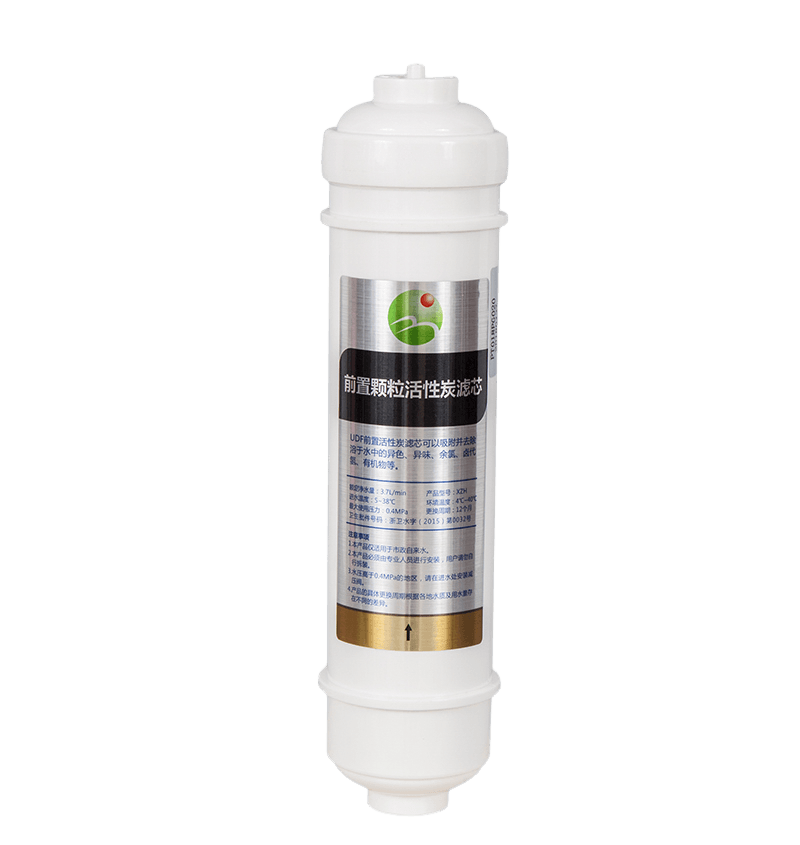
- Sintered Activated Carbon Blocks: Employs high-porosity carbon to chemically adsorb volatile organic compounds (VOCs), agricultural pesticide residues, industrial solvents, and chlorine or chloramines utilized during municipal disinfection, eliminating unpleasant odors and tastes.
- Ultrafiltration (UF) & Reverse Osmosis (RO): For environments demanding total dissolved solids (TDS) reduction, ultrafiltration membranes screen out macromolecular contaminants, while industrial-grade RO membranes force water through a 0.0001-micron semi-permeable barrier, rejecting heavy metals, fluorides, lead, and dissolved inorganic salts.
- Remineralization Stages: To prevent the flat taste associated with aggressively stripped RO water, premium direct-line units feature post-filtration media beds that reintroduce precise, balanced quantities of essential minerals such as calcium, magnesium, and potassium ions, elevating the pH to a slightly alkaline state.
Environmental Sustainability Matrix and Carbon Footprint
Corporate sustainability mandates and Environmental, Social, and Governance (ESG) reporting require measurable reductions in carbon output and waste generation. The logistics network supporting bottled water delivery is energy-intensive. Heavy diesel transport vehicles moving heavy payloads of water from regional bottling plants to urban centers contribute substantially to localized greenhouse gas emissions.
Transitioning to a pipeline water dispenser eliminates this recurring transportation loop completely. By utilizing the existing subterranean water distribution infrastructure, the carbon footprint associated with transport drops to zero. Additionally, the reduction in single-use plastic caps, protective film wraps, and damaged structural polycarbonate bottles supports zero-waste-to-landfill objectives, providing clear metrics for corporate sustainability audits.
Facility Management Real Estate Optimization
Square footage in premium commercial business districts carries a high premium. Storing a rolling inventory of twenty to thirty 5-gallon bottles requires dedicated, temperature-controlled floor space to prevent algae growth caused by sunlight exposure. Additionally, the physical exertion required to lift, flip, and mount these 42-pound (19 kg) bottles introduces distinct workplace ergonomic hazards, frequently resulting in repetitive strain or lumbar injuries among facility maintenance staff.
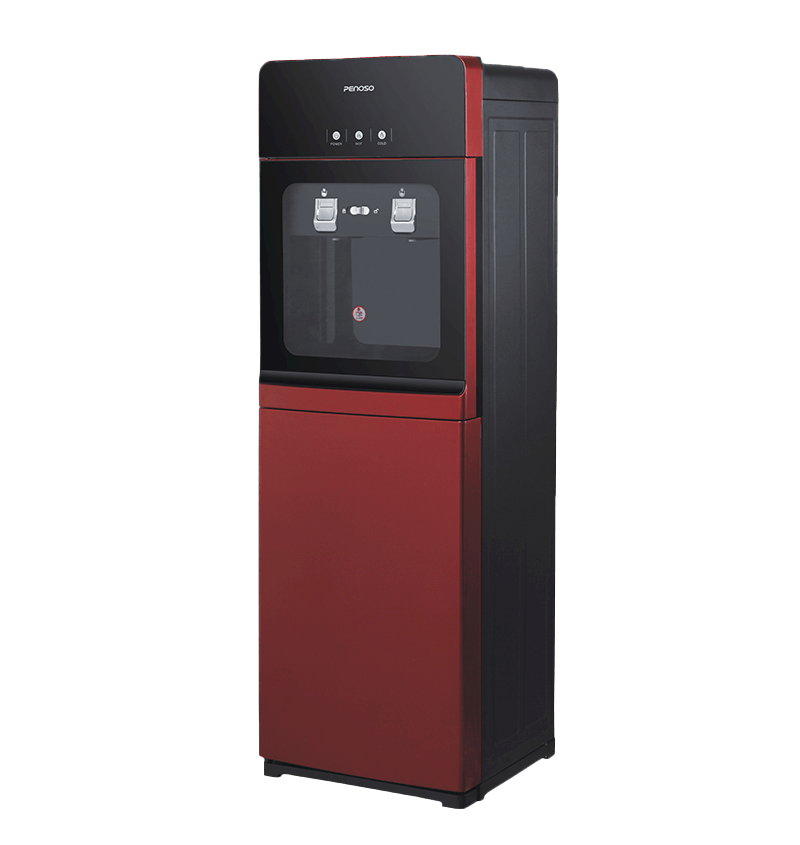
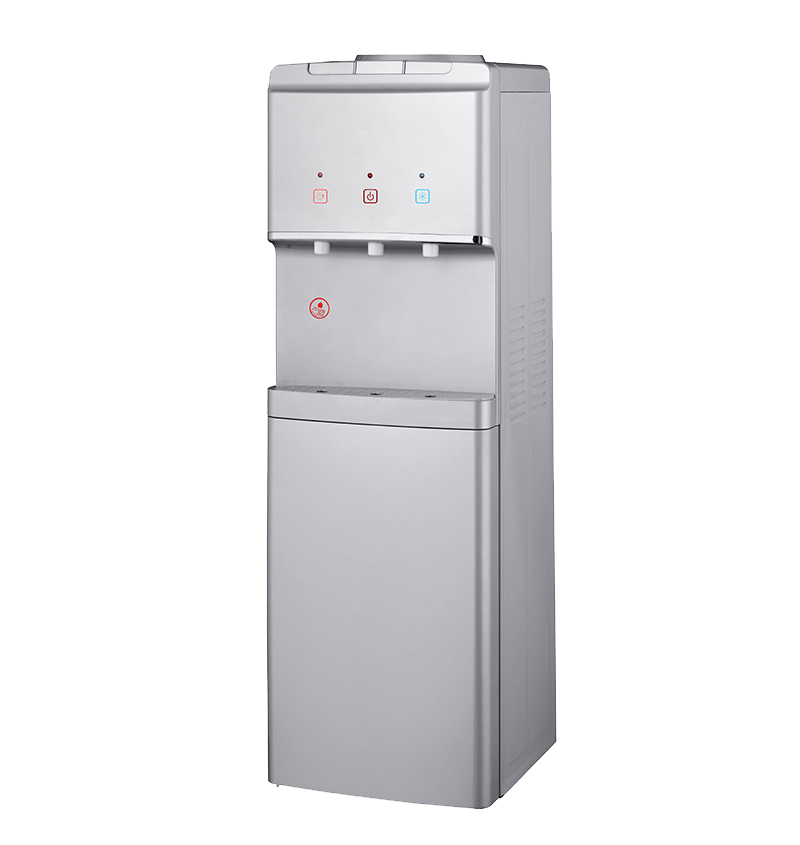
A pipeline water dispenser occupies a compact footprint, with freestanding models requiring minimal floor space and under-counter configurations integrating seamlessly into existing breakroom cabinetry. The elimination of manual bottle changes streamlines facility operations, allowing maintenance personnel to focus on higher-value facility tasks rather than heavy inventory management.
Frequently Asked Questions
How does a pipeline water dispenser connect to the building's water supply if there is no nearby drain?
Most modern direct-line dispensers only require a standard 1/4-inch or 3/8-inch flexible John Guest water line, which can be routed discretely through drop ceilings, baseboards, or cabinetry from up to 50 feet away. If the unit features a high-capacity Reverse Osmosis system that generates wastewater, or if it has a large drip tray, a compact, quiet condensate pump can be installed to pump drainage vertically into distant wastewater lines without requiring a gravity drain nearby.
What happens to the water supply during a municipal power outage or water main break?
During a power outage, a pipeline water dispenser will lose its ability to actively chill or heat water, though models with mechanical dispensing valves can still deliver ambient-temperature filtered water via line pressure. In the rare event of a municipal water main break or low-pressure anomaly, internal pressure switches within premium dispensers automatically shut off the system to prevent the pumps from running dry and protect the internal filtration media from heavy incoming silt loads.
How often do the internal filters of a direct-line system require replacement?
Filter longevity depends directly on the incoming water quality and total usage volume. In standard commercial environments, standard sediment and carbon filters are rated for approximately 2,500 to 5,000 gallons (9,500 to 19,000 liters) of throughput, which generally translates to a replacement cycle of every 6 to 12 months. High-end systems feature automated LED alerts or integrated flow meters that lock out the system or notify facility managers precisely when a filter change is mandatory to maintain water safety.
Is the water from a pipeline dispenser as safe as water from a natural spring bottle?
Yes, and frequently it is safer and more consistent. While natural spring water is subject to seasonal environmental changes and potential contamination at the source, a pipeline system utilizing multi-stage ultrafiltration or reverse osmosis removes contaminants down to a microscopic level right at the moment of consumption. This eliminates the risk of bacterial growth or chemical leaching from plastics that can occur when bottled water sits in warm warehouses for extended periods.
Can a direct-line system handle high-volume demands for specialized beverages like sparkling water?
Yes, premium commercial-grade pipeline water dispensers can be equipped with advanced carbonation chillers. These units utilize internal saturator tanks injected with pressurized Carbon Dioxide (CO2) gas at cold temperatures to dissolve the gas efficiently into the filtered water line. This allows the system to deliver an uninterrupted supply of crisp, high-effervescence sparkling water, alongside chilled and piping hot options, satisfying diverse workplace preferences without any bottle management.