 English
 عربى
عربى Português
 Español
Your tap water looks clear and tastes fine, but a recent laboratory result shows 23 parts per trillion of PFOA and PFOS combined — nearly six times the enforceable limit of 4 parts per trillion that the U.S. Environmental Protection Agency has established for public water systems. Communities across North America and Europe are reporting similar detections, and as testing expands, the number of households confronted with PFAS contamination continues to grow.
The conclusion up front: a basic carbon pitcher will not solve this problem. The only technology that consistently removes 95 percent or more of PFAS from drinking water is reverse osmosis. This article explains what PFAS are, compares the filtration methods available today, and gives you a practical checklist for buying a PFAS water filtration system that will still be performing years from now.
What PFAS Are and Why They Matter
PFAS stands for per- and polyfluoroalkyl substances, a family of thousands of synthetic chemicals used since the 1950s in non-stick cookware, waterproof textiles, food packaging, firefighting foams, and industrial coatings. The two most studied compounds are PFOA and PFOS, but newer replacements such as GenX, PFBS, PFHxS, and PFNA share the same fundamental chemistry: carbon chains surrounded by fluorine atoms.
That carbon-fluorine bond is one of the strongest in organic chemistry. It gives the chemicals their industrial value and their resistance to degradation. Sunlight, heat, and microorganisms do not break PFAS down, which is why they are called forever chemicals. Once released, they move through groundwater, accumulate in the food chain, and persist in the human body for years. The U.S. Centers for Disease Control and Prevention has found PFAS in the blood of nearly everyone it has tested.
Health research associates long-term exposure with elevated cholesterol, reduced immune function in children, altered liver enzymes, pregnancy complications, and increased risk of kidney and testicular cancer. Because PFAS are water-soluble and do not boil away or evaporate, contaminated drinking water is one of the main exposure routes for people who live far from any obvious industrial source.
Which PFAS Water Filtration Technologies Actually Work
Many water filters claim to improve water quality, yet only a few remove PFAS effectively. The physical principle behind each technology determines its performance, and that is where the comparison begins.
| Technology | PFAS Removal | How It Works | Key Limitation |
|---|---|---|---|
| Reverse osmosis (RO) | 95% or higher for most PFAS compounds | Forces water through a semi-permeable membrane that rejects molecules larger than water | Requires adequate water pressure; produces concentrate water; filters need regular replacement |
| Granular activated carbon (GAC) | Moderate to good; better for long-chain PFAS | PFAS molecules adsorb onto the large surface area of carbon granules | Media saturates over time; replacement frequency depends on water quality |
| Ion exchange resin | Good for many PFAS, including some short-chain compounds | Charged resin beads bind PFAS ions from the water | Resin capacity is finite; requires regeneration or replacement |
| Nanofiltration | 90 to 99% in controlled tests | Membrane with slightly larger pores than RO rejects organic molecules | Fewer standardized PFAS certifications; equipment cost is higher |
| Ultrafiltration | Minimal | Sieve-like membrane removes particles, bacteria, and viruses | PFAS are dissolved molecules that pass through the pores |
| Boiling | None | Heat kills microbes but does not separate dissolved chemicals | Can concentrate PFAS as water evaporates |
Reverse osmosis separates at the molecular level. The membrane pores are roughly 0.0001 microns, small enough to reject hydrated ions and large organic molecules while allowing water through. Activated carbon works by adsorption, which is effective for long-chain PFAS such as PFOA and PFOS but less consistent for newer short-chain replacements. Ion exchange resins bind PFAS ions to charged beads, but performance varies with the specific resin and the local water chemistry.
Ultrafiltration, used in many modern tap filters and pitchers, is a sieve: it removes particles and bacteria but lets dissolved PFAS pass through. Boiling concentrates PFAS rather than removing it. The pattern is clear — only molecular-level separation delivers reliable reductions.
Why Reverse Osmosis Is the Benchmark for PFAS Removal
A residential reverse osmosis system typically combines several stages: a sediment filter, one or two carbon blocks, the RO membrane, and a final polishing filter. The carbon blocks remove chlorine, taste compounds, and some PFAS before they reach the membrane. The membrane removes dissolved salts, heavy metals, and the great majority of PFAS. That redundancy matters because each stage protects the next, and the system keeps performing even as individual filters age.
Independent verification matters more than marketing claims. Look for a system tested under NSF/ANSI Standard 58 with published reduction data for PFOA and PFOS. Modern thin-film composite membranes achieve rejection rates above 98 percent, and you can confirm real-world performance with a TDS meter or a laboratory test.
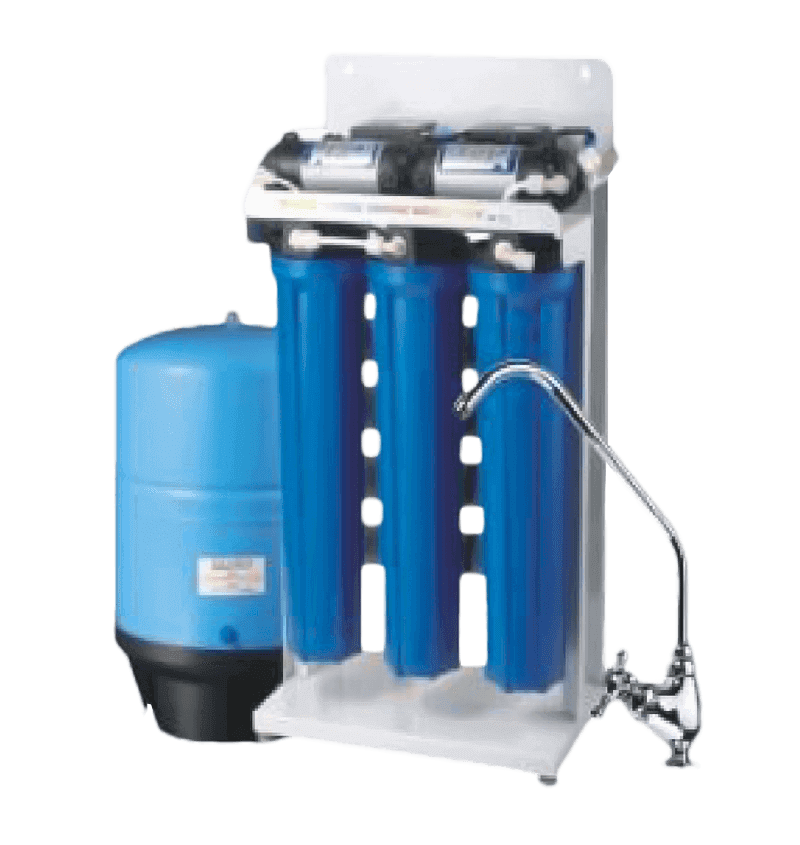 5-Stage 400 GPD Reverse Osmosis System with Steel TankThis high-output RO system delivers about one liter per minute, making it a practical upgrade from pitchers or slower 50-gallon units. Its five-stage filtration and automatic cleaning support consistent PFAS reduction when verified under NSF Standard 58.View Product →
Flow rate is a practical consideration. Older 50-gallon-per-day systems fill a storage tank slowly, which can be frustrating in a busy kitchen. A system rated at 400 gallons per day produces roughly one liter of treated water per minute, filling bottles and kettles without the wait. If you are replacing a pitcher or planning a new kitchen, that difference is noticeable immediately.
What to Look For in a PFAS Water Filtration System
When comparing products, use this checklist to separate meaningful specifications from vague promises:
- Third-party certification: Look specifically for NSF/ANSI 53 or 58 certification that lists PFOA and PFOS reduction, supported by test data.
- Membrane type: Thin-film composite (TFC) membranes are the current standard; they resist chlorine and deliver higher rejection rates than older types.
- Filtration stages: At minimum, sediment, carbon, and RO membrane. Extra stages such as UV light or alkalizing media are optional and do not necessarily improve PFAS removal.
- Operating pressure: RO systems work best at 40 to 80 psi. If your house pressure is lower, the system must include a booster pump.
- Recovery rate: Residential systems typically recover 15 to 30 percent of the incoming water; the rest goes to the drain as concentrate. Lower recovery is more efficient but can shorten membrane life.
- Filter replacement cost: Price a three-year supply of prefilters, post-filters, and the membrane before you buy. This is the real operating cost of any PFAS water filtration system.
Under-Sink Systems vs. RO Drinking Water Dispensers
Once you have chosen RO technology, the next decision is how the treated water reaches your glass. An under-sink RO system sits inside the cabinet and feeds a dedicated faucet. It is the most common setup for homes because it keeps equipment out of sight and produces filtered water at a permanent location.
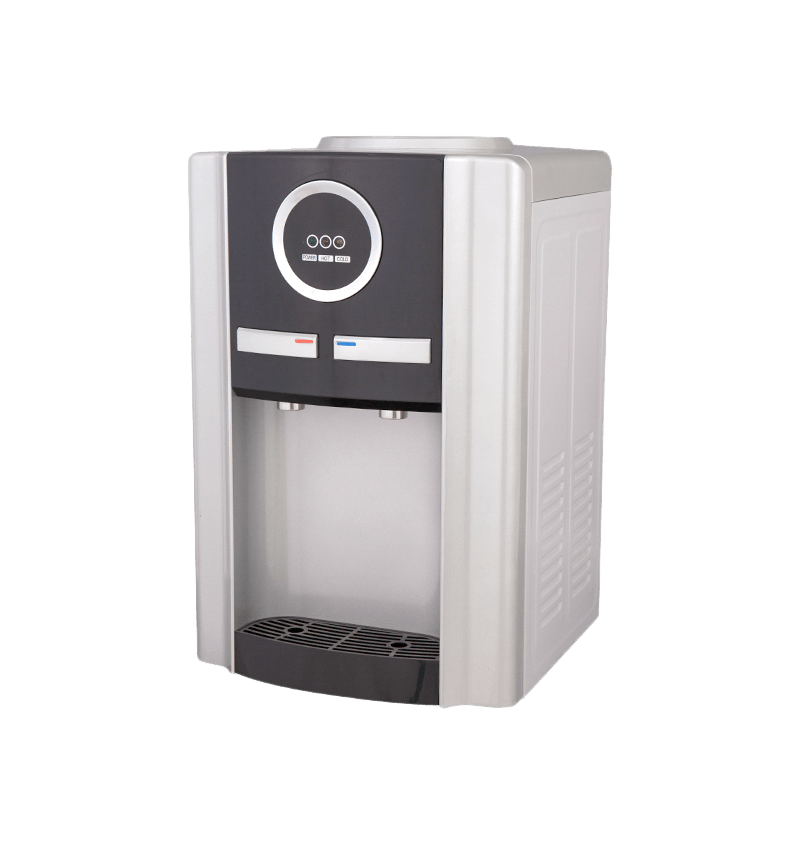
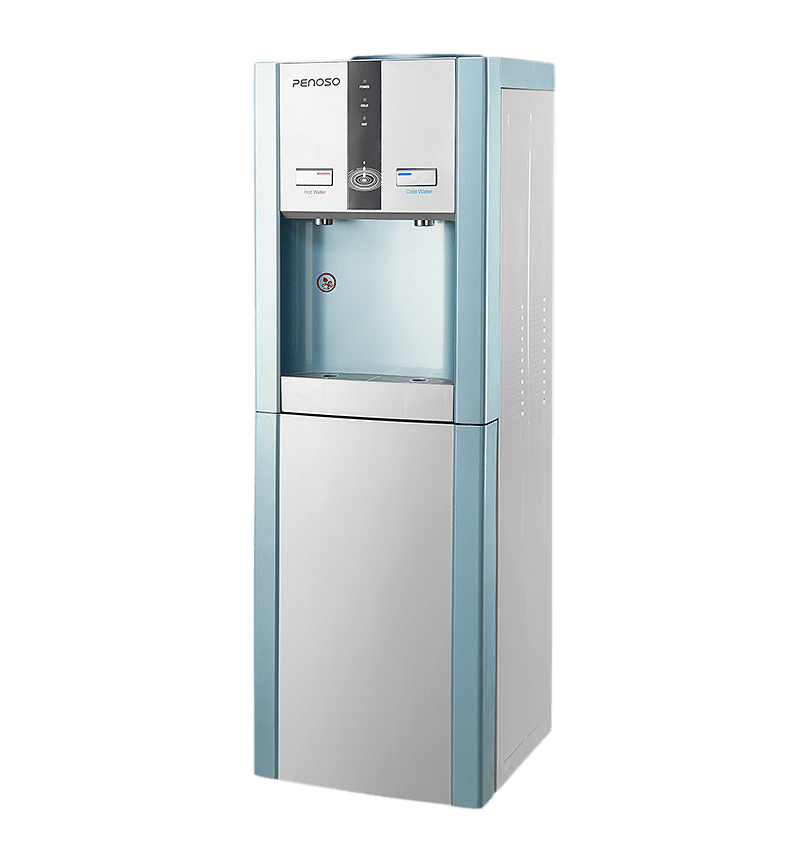
For offices, workshops, schools, and rental spaces, an integrated RO water dispenser combines purification, storage, heating, and cooling in one appliance. It connects directly to the water line, fills a cup on demand, and eliminates the need for a separate kettle, water cooler, or under-sink installation. Many models offer child-safe hot water locks, which matters in workplaces and public areas.
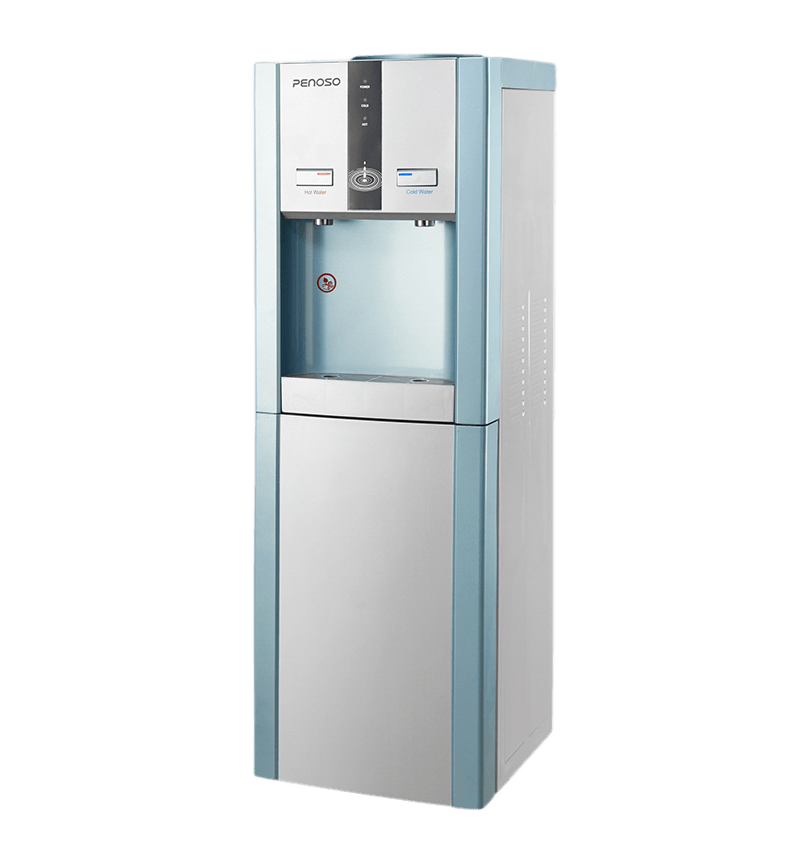 Hot and Cold RO Water Dispenser for WorkplacesAn integrated countertop unit that combines purification, heating, and cooling for direct water-line connection. Suitable for offices and public areas, with stainless steel construction and child-safe hot water lock features highlighted in the surrounding guidance.View Product →
If counter space is tight or you prefer lower noise, an all-in-one RO dispenser with electronic cooling is a compact alternative to compressor-based machines. Electronic cooling is quieter and uses less electricity, at the cost of slightly cooler output in hot climates. Either way, the PFAS removal is provided by the same multi-stage RO process.
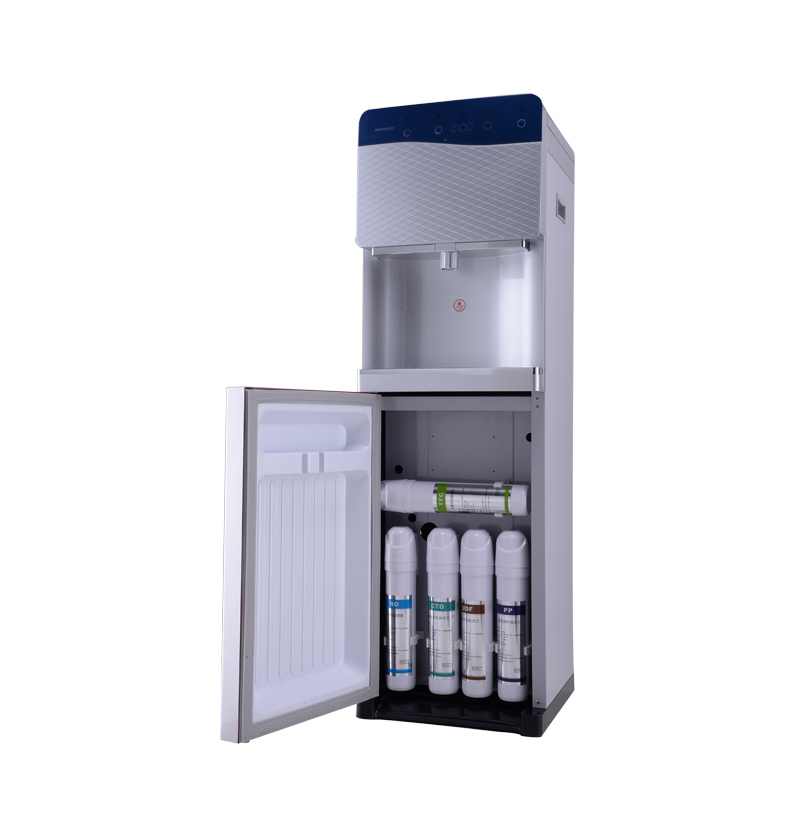 All-in-One Electronic Cooling RO DispenserA compact, quieter alternative to compressor-based dispensers, using electronic cooling for lower energy use. This model suits tight spaces while still providing multi-stage RO filtration, though output temperature may be warmer in hot climates.View Product →
Maintenance: The Real Work Behind Consistent PFAS Removal
An RO system only removes PFAS when every stage is functioning. A clogged sediment filter lowers pressure and forces the membrane to work harder. A saturated carbon block lets chlorine reach the membrane and shorten its life. The membrane itself, typically rated for two to three years, loses rejection efficiency slowly — without obvious warning signs.
A practical maintenance schedule keeps the system in range:
- Replace sediment and carbon prefilters every 6 to 12 months, depending on water quality and usage.
- Replace the RO membrane every 2 to 3 years, or when product water TDS measurements start climbing.
- Sanitize the system after long idle periods and after any maintenance that opens the water path.
- On dispensing units, clean the nozzle, drip tray, and internal lines according to the manufacturer's instructions.
Cartridge availability is a strategic question, not an afterthought. Standard 10-inch cartridges are widely available from many suppliers, while proprietary cartridges lock you into one source. A manufacturer that produces both the appliance and its filters — and keeps spare parts in production — makes the long-term cost predictable.
The Bottom Line: Choose a Certified Multi-Stage RO System
PFAS contamination will not be solved by boiling water, UV light, or a typical ultrafiltration pitcher. The most reliable, widely documented approach is point-of-use reverse osmosis, applied through a certified multi-stage system and maintained on schedule.
Test your water first so you know the starting concentrations. Then match the system to your pressure, flow, and installation conditions. Whether you choose an under-sink unit or an integrated RO dispenser, the membrane is doing the critical work, and the carbon stages are protecting it. That combination, backed by third-party certification and a steady supply of replacement filters, is what turns a purchase into a long-term health decision.
For a complete range of reverse osmosis water purifiers and household water treatment equipment, work with a manufacturer that builds the machines and the filters together. That alignment keeps the system performing exactly as designed, and it guarantees that cartridges and spare parts remain available for the life of the product.