 English
 عربى
عربى Português
 Español
A facilities manager at a 600-student middle school counted more than 1,200 single-use water bottles in the recycling bins during one September week. The old drinking fountains sat nearly unused. The bottled-water cooler in the staff room ran all day, and the monthly jug delivery invoice kept climbing. That combination — wasted plastic, avoided fountains, and recurring bottled-water costs — explains why the recommended sustainable water solutions for schools now center on filtration-integrated dispensers rather than conventional fountains alone.
Sustainable in this context means three things working together: the equipment reduces environmental impact, the operating cost stays manageable, and students actually drink from it. A unit that saves energy but delivers water nobody wants fails the sustainability test just as clearly as a cooler that fills a dumpster with plastic jugs.
What Makes a School Water Solution Sustainable
Before comparing products, define the criteria. A sustainable school water solution should do four things:
- Cut single-use plastic: replace bottled water purchases with purified tap water dispensed on-site.
- Limit energy use: avoid units with large storage tanks that reheat and recool water continuously.
- Deliver safe water: remove sediment, chlorine taste, lead, and microbial risk at the point of use.
- Stay serviceable: durable construction with replaceable filter cartridges rather than disposable machines.
These criteria all point in the same direction: filter the school's existing water supply at the point of use, dispense it efficiently, and keep the maintenance schedule simple enough for a facilities team to follow.
Comparing the Main Solution Types
Three configurations dominate school hydration projects today. Bottled water coolers use delivered jugs and are the easiest to install. They also carry recurring delivery costs, manual handling, and a large plastic footprint. Bottleless dispensers connect directly to the school water line and filter on-site, which eliminates jugs entirely. Bottle-filling stations add a high-flow filling spout to a fountain, and often include a counter that displays bottles saved — a visible motivator for students and a useful measure for sustainability reporting.
| Configuration | Water source | Plastic footprint | Energy profile | Typical upkeep |
|---|---|---|---|---|
| Bottled water cooler | Delivered 5-gallon jugs | High | Moderate; tank keeps water cold all day | Jug handling, cleaning |
| Bottleless point-of-use dispenser | School water line | Minimal | Low to moderate | Filter changes, periodic sanitizing |
| Bottle-filling station | School water line | Minimal | Low | Filter changes, sensor upkeep |
| RO purified dispenser | School water line | Minimal | Low to moderate | Membrane and filter changes |
Direct-piped, bottleless systems are usually the strongest recommendation for new installations, provided the incoming water pressure is within the equipment specification — typically 0.1 to 0.4 MPa for pipeline dispensers. Schools with very hard water or heavy sediment may need a pre-filter or a system rated for that feed water quality.
Point-of-Use Purification: The Practical Default
Point-of-use purification turns the school's own water supply into the drinking water source. A direct-piped dispenser with reverse osmosis filtration removes a broader range of contaminants than carbon filtration alone, including heavy metals and dissolved solids. In older buildings with lead solder or aged pipes, that extra reduction is a real safety margin.
RO integrated dispensers are available in configurations that supply hot, cold, and ambient water, or use a compressor for higher cold-water demand. Facility managers should match the production rate to peak usage, not average usage. A small RO unit rated at 50 gallons per day will struggle during the 15-minute rush between class periods. Choosing a unit with a storage capacity and production rate that match the school's schedule is the difference between a hydration station and a bottleneck.
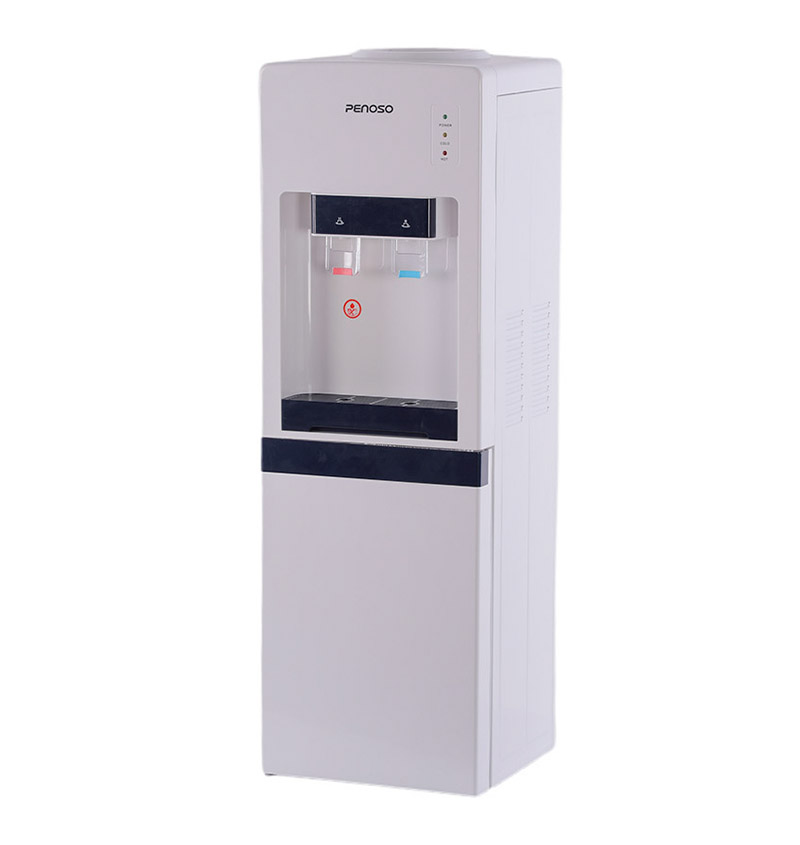 Pipeline Water Dispenser with RO/UF Filtration PS-SLR-102This stainless steel pipeline dispenser with RO/UF filtration suits schools needing reliable, high-volume purified water. Its production and storage capacity can meet peak demand between classes, reducing bottlenecks and eliminating bottled-water logistics.View Product →
Pipeline-connected RO dispensers also remove the delivery logistics that come with bottled coolers. There are no jugs to store, no contracts to renew, and no empty-bottle pickup to coordinate. The school simply replaces the filter cartridges on schedule, and the equipment keeps producing purified water.
Energy and Operating Cost Considerations
Energy use in school hydration equipment comes mostly from heating and cooling. Units with storage tanks maintain temperature around the clock, drawing power even at night and over holidays. Models with on-demand heating or programmable standby reduce that load considerably. On a campus with two dozen units, the annual difference can be thousands of kilowatt-hours.
Schools with an eye on both budgets and sustainability should look at energy-saving water dispensers that use better insulation and idle-mode controls. The upfront cost is usually modest, and the payback comes every month on the electric bill.
Filter cost is the other recurring line item. A typical schedule replaces sediment and carbon pre-filters every 6 to 12 months and the reverse osmosis membrane every 2 to 3 years, depending on feed water quality. Schools should calculate total cost of ownership over five years — purchase price plus energy plus filters — rather than comparing initial equipment prices only.
Not every location needs a high-capacity unit. Staff rooms, counseling offices, and small learning spaces can use a compact countertop model that filters locally and avoids the energy load of a full-size floor unit.
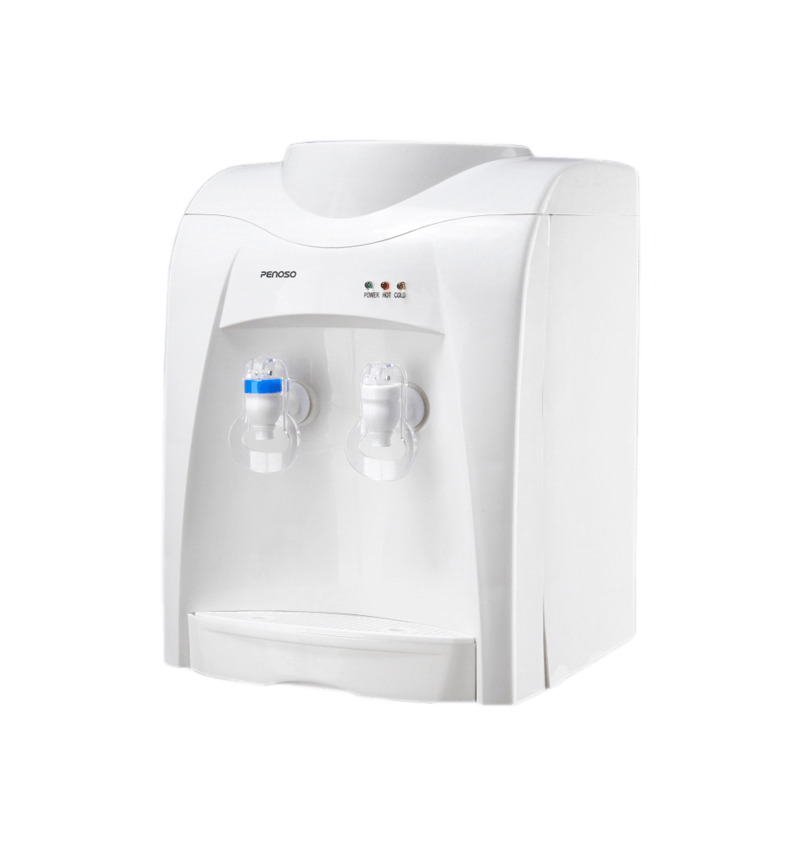 Mini Water Cooler and Dispenser for Home PS-STR-02A compact countertop dispenser ideal for staff rooms and small learning spaces. Its stainless steel construction aligns with safety and hygiene priorities, offering local filtration without the energy load of full-size floor units.View Product →
Safety and Hygiene Requirements
School water equipment serves children, so safety comes before convenience. Hot water taps must have child safety locks to prevent accidental scalding. Anti-scalding flow control and double-wall tank designs reduce the risk further. Materials matter too: food-grade stainless steel resists bacterial growth and cleans far more easily than plastic.
The water path should also be maintainable. Models with accessible cold and hot tanks, or with self-cleaning or sterilization cycles, help the facilities team keep water quality consistent. Filter change indicators prevent the most common failure mode — a filter that is replaced too late because nobody tracked the schedule.
For schools that want to control usage, wall-mounted units with card-based or code-based activation prevent misuse and let administrators see which areas consume the most water. A campus card-operated dispenser can link hydration to a student ID card, avoid unsupervised hot-water access, and cut down on vandalism and waste.
.jpg) Campus Credit Card Machine GX-6This card-operated water dispenser enables controlled access on campus, linking to student IDs to prevent misuse and track consumption. It supports usage monitoring and reduces waste, making it a practical choice for school hydration management.View Product →
Campus Credit Card Machine GX-6This card-operated water dispenser enables controlled access on campus, linking to student IDs to prevent misuse and track consumption. It supports usage monitoring and reduces waste, making it a practical choice for school hydration management.View Product →A Simple Procurement Process
Choosing a solution does not require a consultant. A practical procurement process follows six steps:
- Measure the current situation: count bottle deliveries, review the water bill, and note which fountains are ignored.
- Test the incoming water: total dissolved solids, hardness, lead, and microbial indicators determine whether the system needs RO, carbon filtration, or UV.
- Estimate peak demand: the number of students and the short windows between classes define the required flow rate and storage.
- Define placement zones: cafeterias, gyms, staff areas, and small learning spaces each suit a different format.
- Compare five-year ownership cost, not purchase price alone.
- Verify certification and compliance: CE, CB, and applicable national safety standards are essential for public buildings.
Documenting these steps in advance makes the eventual purchasing decision defensible to a school board, a sustainability committee, or a parent group. It also prevents the common mistake of buying based on a single crowded hallway when the rest of the campus has different needs.
The recommended sustainable water solutions for schools share one direction: filter at the point of use, cut plastic and energy, and choose equipment safe and serviceable enough for a campus environment. The specific mix will vary with building age, water quality, student count, and budget, but the approach is stable. A school that selects filtration-integrated, energy-conscious dispensers, plans the filter schedule, and lets students see the bottles they are saving will reduce waste, control operating costs, and improve hydration at the same time.