 English
 عربى
عربى Português
 Español
It is the part of owning a traditional top loading water cooler that nobody enjoys: lifting a full 5-gallon bottle, balancing it above the cabinet, and guiding the neck into the opening without spilling. A bottled loading water dispenser removes that step entirely. The bottle sits inside a lower compartment, a small pump moves the water upward, and you get the same hot, cold, and room-temperature water without ever lifting more than the bottle cap.
Most buyers switch for one simple reason: the machine is easier and safer to use. From an ergonomics standpoint, bottom loading bottled water dispensers are the better default choice for households with older adults, smaller-framed users, or anyone who has watched a 5-gallon jug wobble at shoulder height. The trade-off is a slightly higher price and a shorter product list, but the convenience justifies it for most homes and offices.
What a Bottled Loading Water Dispenser Does Differently
In a bottom loading design, the water bottle sits in a base cabinet with the neck facing upward. A food-grade tube connects the bottle to an internal pump, which lifts water into the hot and cold tanks. You select water from the front panel just as you would on a top loading model, but the bottle never leaves the lower compartment.
This layout changes the dispenser's proportions as well. The overall height is lower, so the unit can sit under a standard kitchen cabinet without blocking the countertop view. The lower center of gravity also makes the machine more stable, which matters in homes with children or pets. If you want to compare the available configurations, start with our overview of bottom loading bottled water dispensers and then narrow the list by your room size and daily usage.
Bottom Loading vs. Top Loading: A Direct Comparison
Before comparing prices, look at the operating differences. The table below summarizes what matters most in daily use.
| Consideration | Bottom Loading | Top Loading |
|---|---|---|
| Bottle position | Inside lower cabinet | Inverted on top |
| Ergonomic effort | No lifting required | Manual lifting of each bottle |
| Machine height | Lower, fits under cabinets | Taller and more visible |
| Hot water safety | Child lock common | Child lock varies by model |
| Cleaning access | Upper surface easy; base less accessible | Tank area easier to inspect |
| Typical price | Slightly higher | Generally lower |
For most users, the ergonomic advantage alone is decisive. If you have ever slipped while lifting a full bottle, or if the same dispenser is used by people of different heights and strength levels, a bottom loading design removes the risk instead of managing it.
Safety Features You Should Not Skip
Bottled loading dispensers are popular in homes because they eliminate one major risk, but they still combine boiling water and electricity. Two safety elements matter most: a child-resistant hot water tap and anti-dry burn protection.
A proper child safety lock requires two separate actions, such as pressing a side button while pulling the tap. This is not a convenience feature; it is the main barrier between a curious toddler and 90 °C water. Check that the lock is mechanical rather than a simple switch that a child can operate. The child safety water dispensers range shows how different models address the same risk.
Anti-dry burn protection switches off the heating element when the hot tank runs low. This protects the machine from damage and prevents the heater from running dry overnight. Also confirm that the dispenser has a drip-proof nozzle and a removable base tray, because small leaks are the most common source of complaints after the first month of use.
Practical Buying Checklist
Heat output matters more than most buyers expect. A 3-liter hot tank serves an office better than a 2-liter one, while a home may only need hot water for tea and instant meals. If you are equipping a shared space, the larger bottom loading water dispenser with a bigger tank is a reasonable starting point.
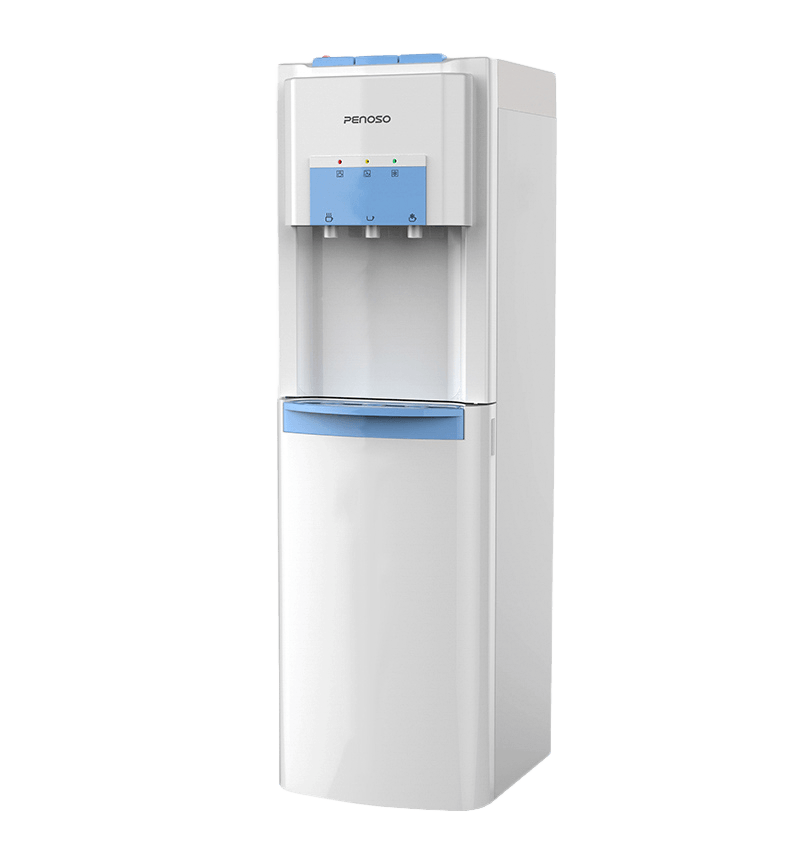 Wholesale Three temperature setting Bottom Loading Hot/Cold Water Dispenser PS-SNingbo Penoso Electric Appliance Co., Ltd is China Three temperature setting Bottom Loading Hot/Cold Water Dispenser PS-SLR-813 Suppliers...View Product →
Cooling performance separates electronic and compressor models. Compressor cooling holds lower temperatures in warm rooms and copes with heavy use, but it is noisier. Thermoelectric cooling is quiet and energy efficient, and it handles moderate use well.
Also check the dispensing height and bottle compatibility. A countertop fan sits higher than a freestanding unit because it is designed to rest on a surface, while a floor-standing model must be tall enough for standard cups. Make sure the bottle compartment accepts the bottle size used by your local water delivery service; most units take 18.9-liter bottles, but some small models are limited to 11-liter jugs.
Materials, certifications, and compliance
Insist on food-grade materials for every surface that contacts water, including the internal tube and tanks. Then verify certifications for your market: CE for Europe, CB for international electrical compliance, SASO for Saudi Arabia, and SONCAP for Nigeria. A manufacturer that publishes certifications on each product page is easier to verify than one that mentions them only in general terms.
Energy use and noise
Bottled loading dispensers heat and cool continuously, so energy efficiency becomes a real cost driver over time. Look for insulated tanks and a thermostat that cycles the heater instead of running constantly. If the unit will sit in a bedroom or a quiet office, ask for the noise level of the cooling system. Compressor models deliver stronger cooling but produce a noticeable hum, while thermoelectric models trade some cooling capacity for silence.
Cleaning and Maintenance Matters
Owners often underestimate how much maintenance a bottled dispenser needs. At least once a month, empty the drip tray, wipe the nozzle, and clean the lower cabinet where the bottle sits. Every two to three months, drain and sanitize the internal water path with a citric-acid cleaner made for dispensers, then rinse thoroughly.
Inspect the tube that connects the bottle to the pump. Biofilm can build up inside it, especially in warm kitchens, so replace the tube if it becomes discolored or stiff. If your model includes a filter, follow the replacement schedule; a saturated filter can release more contaminants than it traps. Keep a record of the last cleaning date on the side of the cabinet, and pair deep cleaning with a quick inspection of the power cord and plug. Frayed cords and loose connections are the most common electrical faults on older dispensers.
Matching the Dispenser to the Room
For a home kitchen, choose a compact unit that fits beside a cabinet and still leaves room for cups. The compact bottom loading bottled water dispenser fits that role well without dominating the counter. For an office, prioritize hot tank capacity and a compressor cooling system. For a shared or public space, make child safety the first filter rather than the last.
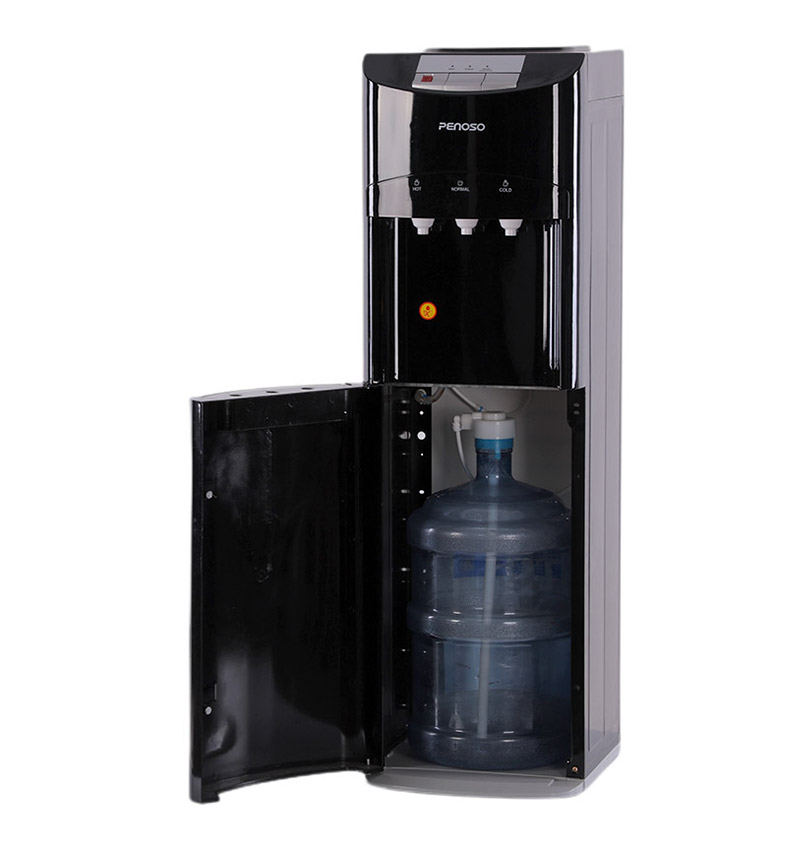 Wholesale Self Cleaning Bottom Loading Water Cooler Water Dispenser - 3 TemperatNingbo Penoso Electric Appliance Co., Ltd is China Self Cleaning Bottom Loading Water Cooler Water Dispenser - 3 Temperature Settings PS-...View Product →
Both the compact and the larger models keep the bottle in the base cabinet, which means no one has to lift it. Once the bottle is set in place, daily operation is the same as any other cooler: select hot or cold water, and let the machine do the work.
A bottled loading water dispenser is not an extravagance if you have ever struggled with a full jug. It is a practical upgrade that removes the most physically demanding part of a water cooler, keeps safety features within reach, and fits into layouts where a tall top loading tower looks out of place. Set your priority order before buying: safety, hot and cold performance, materials and certifications, then maintenance. That order will guide you to a model you will still be satisfied with in the third year of daily use.
.jpg "Self Cleaning Bottom Loading Water Cooler Water Dispenser - 3 Temperature Settings PS-SLR-812B")