 English
 عربى
عربى Português
 Español
The Core Question: How Cold Do You Need Your Water?
Before you compare features, decide what you actually expect from a cold-water dispenser. That single answer determines which cooling technology fits your home or office.
Here is the short version. A compressor-based dispenser can hold cold water at roughly 4-10°C even in a warm room. An electronic, or thermoelectric, dispenser typically delivers 10-15°C water in ordinary room conditions, and its performance drops noticeably when the room gets hot.
The difference is not just a number on a spec sheet. On a summer afternoon, water at 10°C tastes clearly cold and refreshing, while water at 15°C feels only mildly cool. If you want a genuinely cold glass every time you press the tap, a compressor is the only one of the two technologies that reliably delivers that feeling. If a gentle coolness is acceptable, electronic cooling can be enough, and it costs less to buy and run.
As you read the comparison below, keep your own expectations in mind. Ask yourself three questions: how cold does the water need to be, how many people will use the dispenser, and how hot does the room get in summer? Those answers point to the right technology more reliably than any marketing claim.
How Electronic Cooling Works: Thermoelectric Technology Explained
Electronic cooling uses the thermoelectric, or Peltier, effect. When a direct current passes through the junction of two different semiconductor materials, heat moves from one side of the module to the other. One face turns cold while the other turns hot. A small fan and heat sink pull the waste heat away, and the cold side chills the water tank.
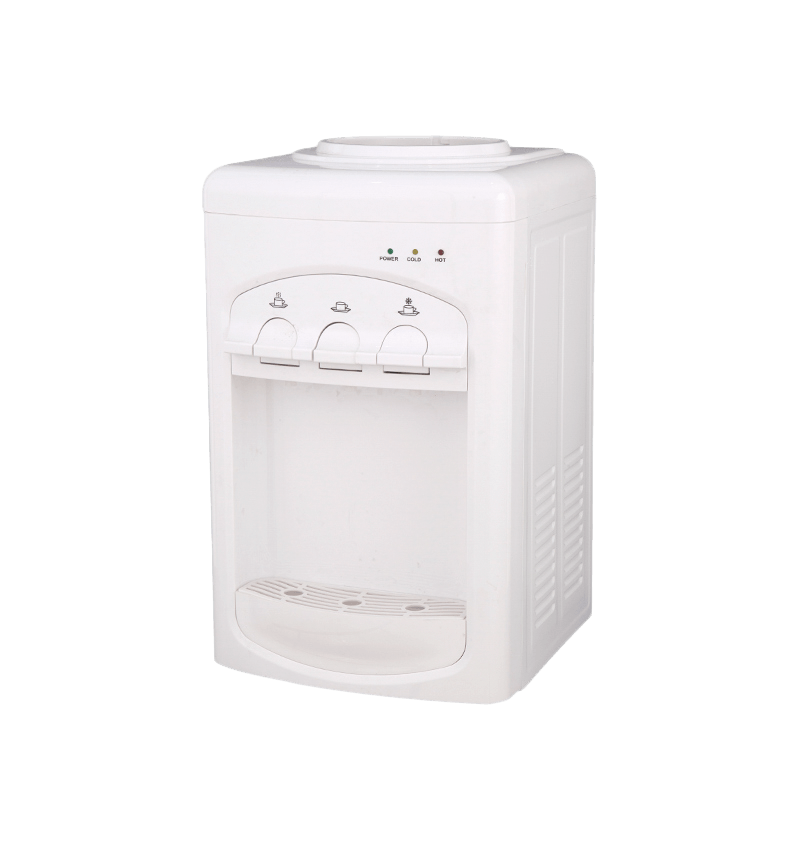
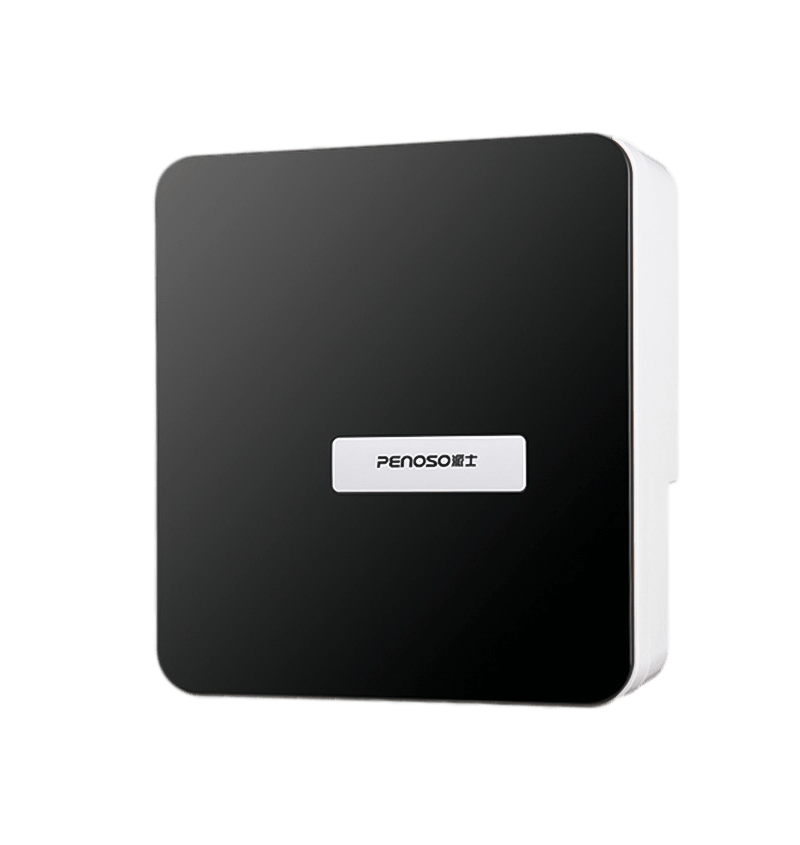
Because the module has no moving parts, no compressor, and no refrigerant, it runs almost silently, typically around 25-30 dB, with no vibration. That is why electronic cooling dominates compact tabletop dispensers and RO all-in-one machines, where size and quiet operation matter more than extreme cold. If you want a dispenser in a bedroom, a study, or a small office, this quiet, lightweight design is a real advantage. Our electronic cooling RO all-in-one dispensers use this approach to keep the footprint small while still offering cold, hot, and ambient water from a single unit.
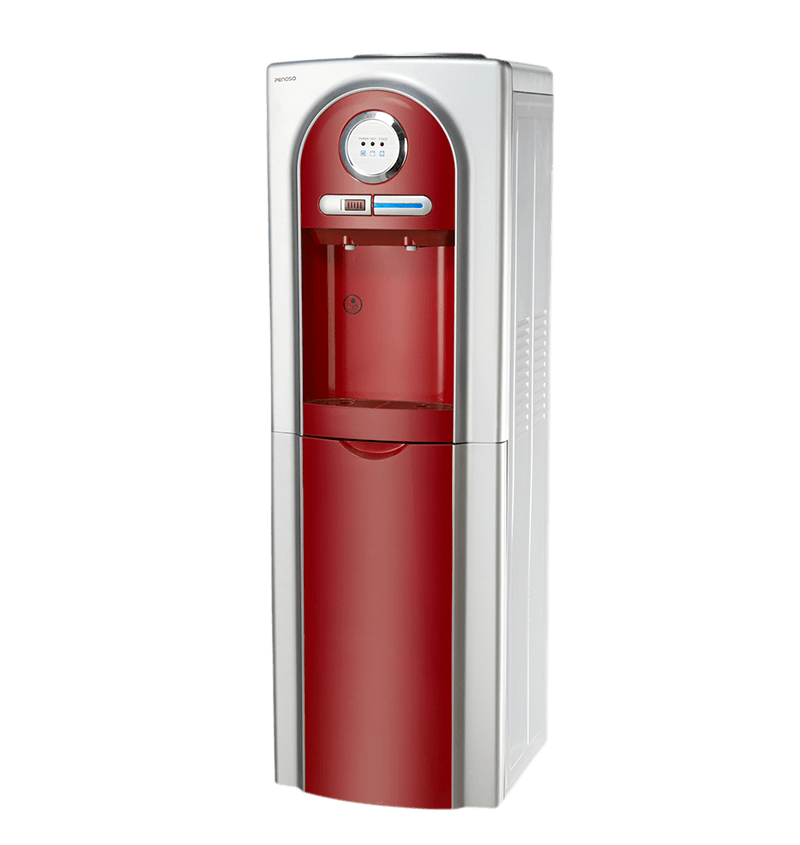
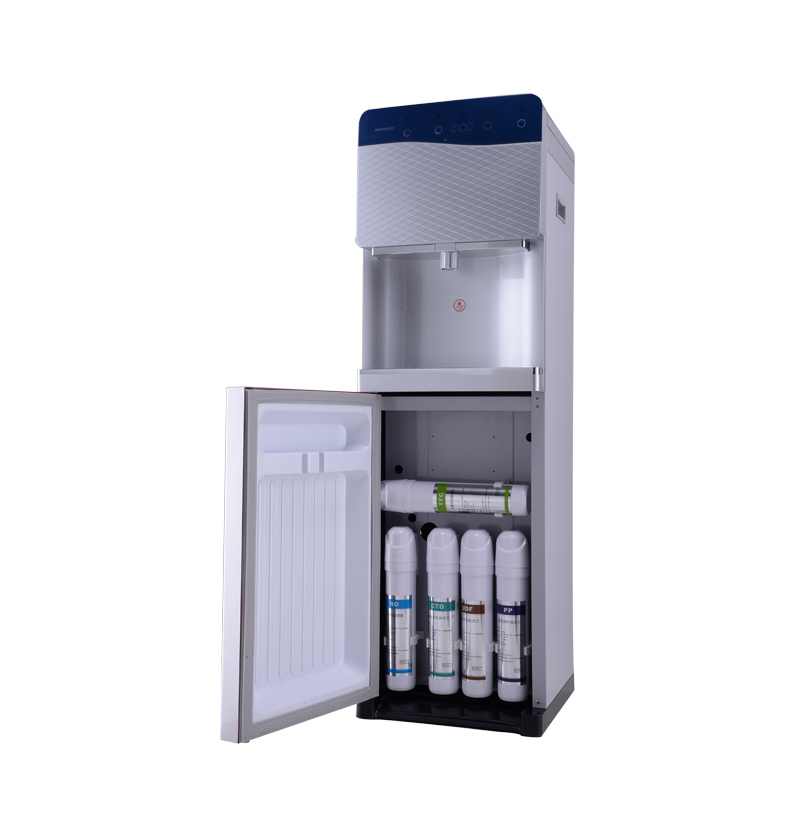 Wholesale RO All-in-One PS-SLR-820 (Electronic) Factory, SuppliersNingbo Penoso Electric Appliance Co., Ltd is China RO All-in-One PS-SLR-820 (Electronic) Suppliers, Factory and Manufacturers,View Product →
The trade-off is just as clear. A Peltier module can only move a limited amount of heat, so its cooling output is modest, and it struggles when the surrounding air is warm.
Typical Temperature Performance of Electronic Coolers
In a typical 25°C room, an electronic cooler can lower water to roughly 10-12°C after an initial standby period. As a rough rule, every 5°C rise in room temperature pushes the output water temperature up by about 3-5°C. When the ambient temperature rises above 30°C, most thermoelectric units can no longer keep the water below 15°C, and the water that comes out may feel only slightly cool.
The table below gives a practical picture of what to expect from both technologies at different room temperatures.
| Ambient temperature | Electronic cooling | Compressor cooling |
|---|---|---|
| 25°C (77°F) | 10-12°C | 4-6°C |
| 30°C (86°F) | 12-15°C and near its limit | 4-7°C |
| 35°C (95°F) | Usually above 15°C; cooling noticeably weak | 5-8°C |
How Compressor Cooling Works: Vapor-Compression Refrigeration Explained
A compressor dispenser works like a small refrigerator. It uses a sealed vapor-compression system with four basic steps. The compressor raises the refrigerant pressure and turns it into a hot, high-pressure gas. The condenser coil releases that heat into the room air. The capillary tube meters the refrigerant and drops its pressure. The evaporator coil then absorbs heat from the water in the cold tank. Because the evaporator coil is wrapped around the storage tank, the water is chilled directly from the outside in.
The key to the compressor's stronger cooling is the refrigerant itself. As it evaporates inside the coil, it absorbs a large amount of latent heat, and that phase change transfers far more heat per unit of time than the thermoelectric effect can manage. This is why compressor-based dispensers can pull water down to 4-10°C and hold it there, much like the cold zone of a domestic refrigerator.
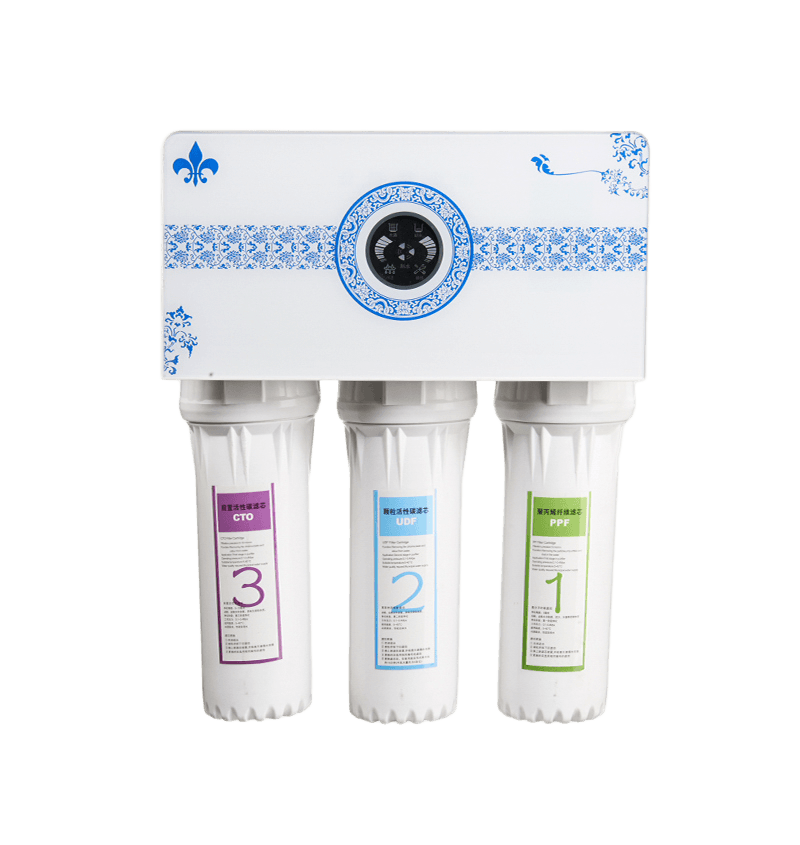
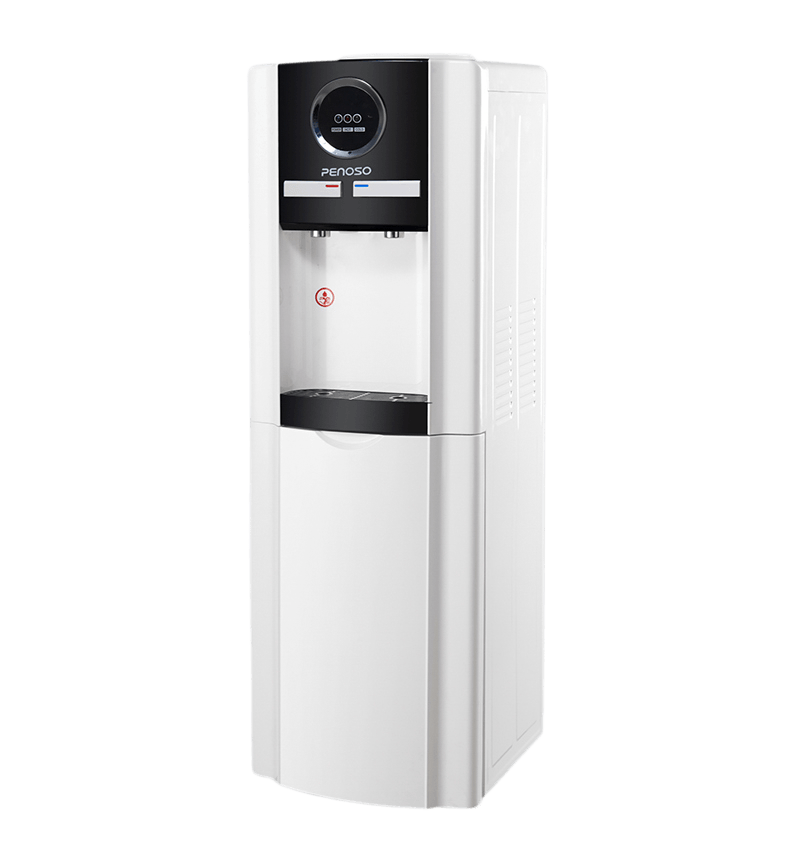
Compressor technology is also the standard in larger freestanding machines and integrated RO dispensers. For example, our compressor-based RO water dispenser models combine this refrigeration system with reverse-osmosis filtration in a single unit, a setup that suits families and offices wanting both filtered water and genuinely cold drinking water.
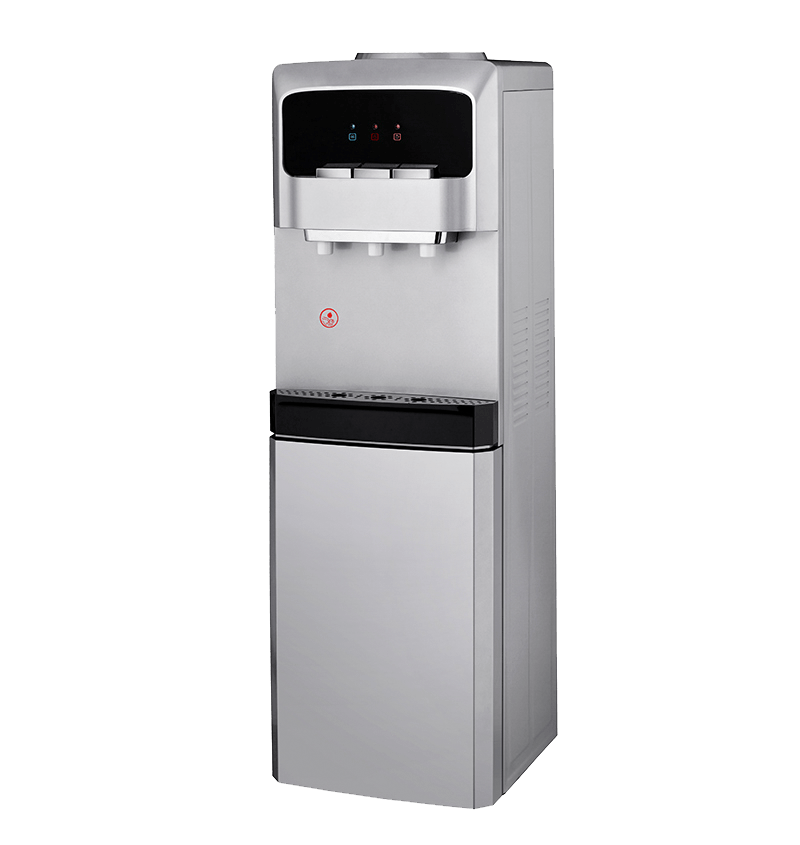
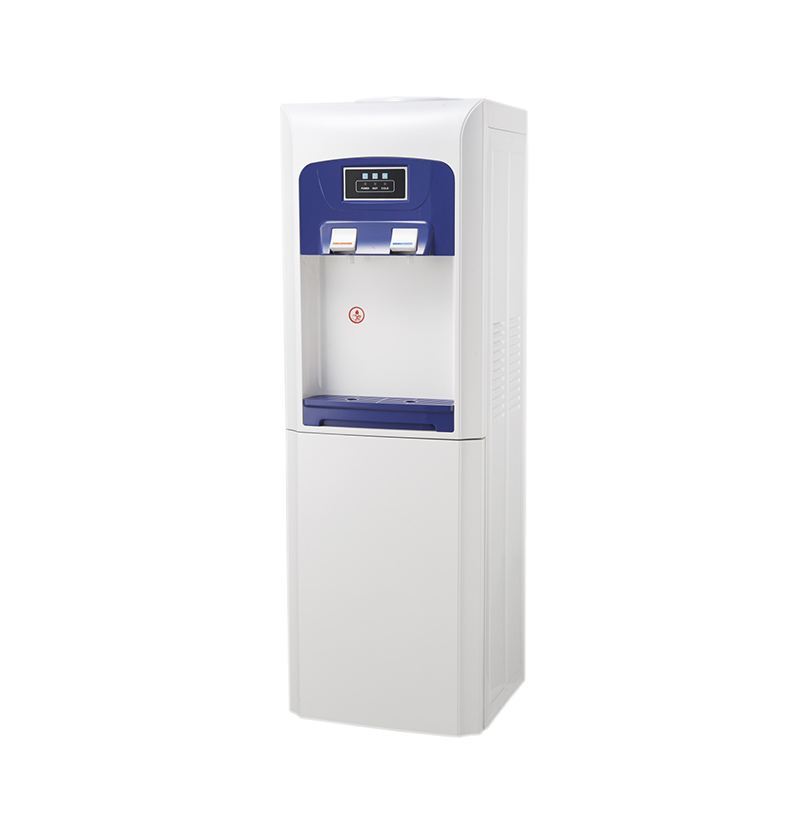 Wholesale RO integrated machine PS-SLR-101 (compressor) Factory, SuppliersNingbo Penoso Electric Appliance Co., Ltd is China RO integrated machine PS-SLR-101 (compressor) Suppliers, Factory and Manufacturers,View Product →
Compressor Cooling Under Challenging Conditions
The real advantage of a compressor appears when conditions get tough. In a room at 35-40°C, a compressor-based unit still produces cold water because the refrigeration system rejects heat efficiently and keeps the evaporator coil cold. Under frequent draws, the compressor cycles on and off to re-cool the incoming water. A typical first pull-down takes 20-40 minutes, and recovery between consecutive glasses is far faster than with electronic cooling.
That is why offices, workshops, and commercial waiting areas tend to choose compressor models. They can serve many people in a row without the cold water turning lukewarm by mid-afternoon.
One boundary is worth mentioning. Compressor systems are designed to chill normal room-temperature inlet water, not to be fed with hot water continuously. If hot water is repeatedly directed into the cold tank, the compressor and capillary system work far beyond their design range, and the unit can fail early. If you connect a dispenser to a pipeline, make sure the inlet water is at normal mains temperature.
Compressor vs Electronic Cooling Water Dispenser: Direct Comparison
Here is the complete comparison across the dimensions that matter in daily use.
- Cooling capacity: Compressor dispensers hold cold water around 4-10°C; electronic coolers deliver roughly 10-15°C in normal room conditions.
- Cooling speed: Compressor units typically reach target temperature in 20-40 minutes; electronic units usually need 40-60 minutes.
- Continuous dispensing: Compressor maintains its temperature through repeated draws; electronic cooling drifts upward as the tank empties and refills.
- Ambient sensitivity: Compressor output barely changes in warm rooms; electronic cooling loses capacity noticeably above 30°C.
- Initial cost: Electronic models usually cost 30-50% less than equivalent compressor models.
- Running energy: For light use, electronic cooling draws less electricity. With frequent cold-water draws, the compressor delivers more cooling per unit of energy, so the difference narrows.
- Noise level: Electronic units are near-silent at roughly 25-30 dB; compressors run at about 40-50 dB, similar to a small refrigerator.
- Maintenance: Electronic cooling has no moving parts and needs little service; compressor repairs require a technician because the refrigerant system is sealed.
- Lifespan: Peltier modules typically show noticeable performance loss after 3-5 years; compressor systems are usually designed for 8-10 years or more.
How to Choose: A Decision Framework Based on Your Real Needs
Use this decision framework instead of guessing by price alone.
- Assess your usage volume. If the dispenser serves one or two people and sees less than about 5 liters of cold water per day, an electronic cooler is usually enough. For a busy household, an office, or any setting drawing 10 or more liters a day, choose a compressor so the water stays cold under demand.
- Check your ambient temperature. In rooms that stay at or below 28°C year-round, electronic cooling handles most needs. If summer room temperature regularly goes above 30°C, or if you are in a tropical climate, buy a compressor model, because the electronic unit will not keep up.
- Balance first cost against long-term value. An electronic model costs less and runs quietly, which suits a tight budget. A compressor model costs more upfront but delivers reliable cold water for years, making it the better value for heavy use.
- Plan for maintenance. If an electronic module fails, the cooling assembly usually needs replacement. A compressor failure requires a technician, but the components are mature and widely available. Whatever you choose, clean the tank, lines, and taps on schedule; water quality depends more on hygiene than on the cooling type.
Common Misconceptions About Electronic and Compressor Cooling
A few claims circulate online about these two technologies. Here is what the engineering reality actually says.
- "Electronic cooling cannot really cool water." Not true in normal conditions. In a 25°C room, a thermoelectric unit will deliver 10-15°C water, which is perfectly drinkable. It simply cannot match the compressor's colder output, especially in warm rooms.
- "Compressor dispensers are too noisy." Modern compressor dispensers operate around 40-50 dB, about the level of a small refrigerator or a quiet conversation. In a kitchen or open office, most people do not find it distracting.
- "Electronic cooling is cheaper to run, so it is always the economical choice." An electronic unit does draw less power per cooling cycle. But when it lacks the capacity to keep up with demand, it runs for longer periods, and the running-cost gap narrows considerably.
- "Compressors need refrigerant refills all the time." A properly sealed refrigeration system does not consume refrigerant. Refills are only needed if the loop develops a leak, which is rare in well-made units. If a compressor dispenser stops cooling, the usual suspects are a failed start relay or a dirty condenser, not refrigerant loss.
Final Recommendation: Matching the Technology to Your Scenario
Choose electronic cooling for a small household, light daily use, a room that stays below about 28°C, or a setting where quiet operation and low initial cost matter most. Typical examples include a bedroom, a study, or a compact office desk.
Choose a compressor model for a busy office, a commercial space, a larger family, a warm or tropical climate, or anyone who wants water that is genuinely cold at every pour. The higher upfront cost pays back through consistent performance, higher capacity, and a longer expected service life.
Both technologies have a valid place, and the right answer depends on your environment and expectations rather than on marketing labels. Our product range includes both compressor and electronic cooling designs, so you can compare real specifications side by side. If you are still unsure which cooling system fits your situation, check the rated cold water temperature and tank capacity on the product page, or contact our team with your room temperature and daily usage volume. We can help you choose a model that will serve you well for years.