 English
 عربى
عربى Português
 Español
A bottleless water dispenser works in three fixed steps: it draws water from a building's cold water line, pushes it through a filter stack, and dispenses it hot, cold, or at room temperature, with no 18.9-litre bottle to lift, store, or reorder. Every other specification in a catalogue, from micron ratings to compressor wattage, hangs off one of those three steps.
That sequence matters before you buy, because a bottleless unit inherits the pressure, hardness, and sediment load of the building it is installed in. The same model can run smoothly in an office in Rotterdam and stall in a factory where line pressure drops at peak hours. Knowing where each component sits in the water path tells you which specs decide whether the machine works on your site, and which are just noise.
The Water Path, From Pipe to Tap
The connection is what separates a bottleless dispenser from a bottled cooler. A 6 mm (1/4 inch) or 9.5 mm (3/8 inch) flexible tube is tapped into a nearby cold water pipe, usually under a sink or from a wall valve, and routed to the inlet on the back of the unit.
From that inlet, water passes a short chain of components before it reaches your cup:
Two parameters decide whether that chain behaves. The first is inlet pressure: most point-of-use units are designed for roughly 0.1 to 0.4 MPa, about 14 to 58 PSI. Below that window a low-pressure switch can cut the machine off or leave the tank slow to refill; above it, a pressure-reducing valve protects the solenoid and the tube joints. The second is the feed water itself. A supply carrying heavy sediment blinds a 5-micron cartridge in weeks, while the same cartridge on soft municipal water lasts months.
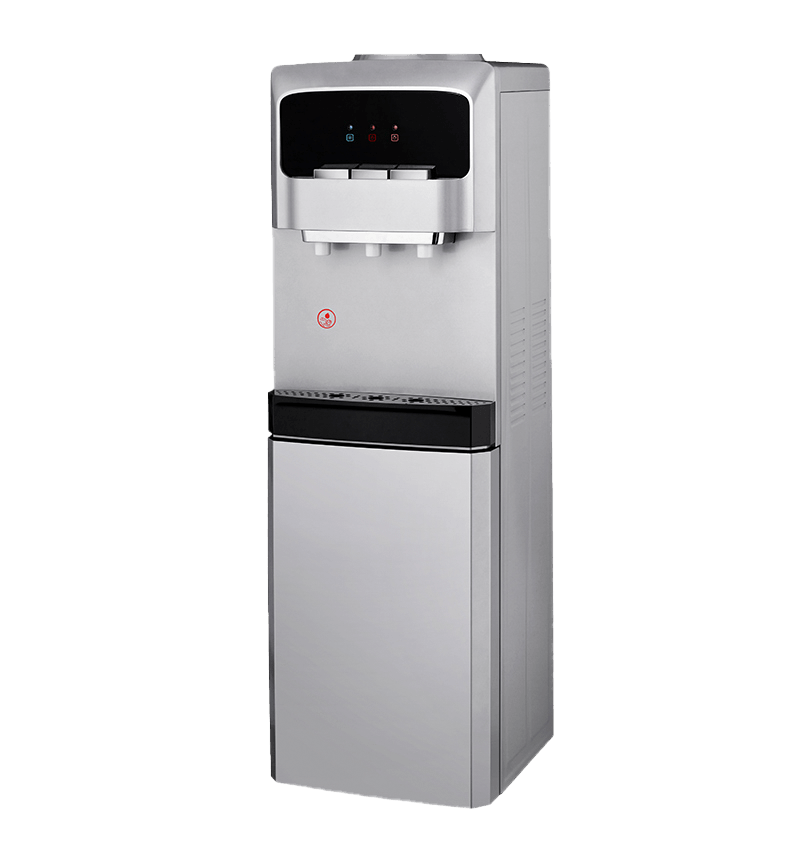 PS-SLR-104S Home Compressor Cooling RO Water DispenserFor home pipeline use, this compressor-cooled RO/UF dispenser provides hot and cold water; check inlet pressure and feed quality before installation.View Product →
After filtration, water sits in a small internal tank, or flows straight through in tankless models, before entering the hot and cold circuits. The tank is what lets a compact unit pour cold water immediately, and it is also the component that needs periodic sanitation.
What the Filter Stack Actually Removes
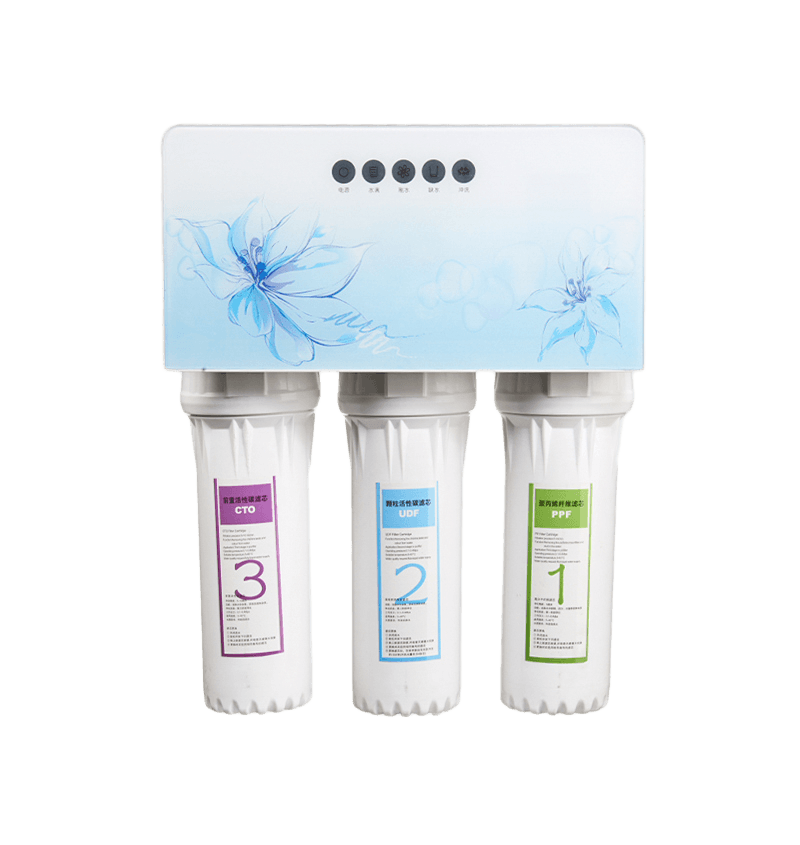
Configuration varies by model, but most bottleless dispensers use two to five stages, and each stage has one job:
- Sediment (PP) — traps sand, rust, and pipe debris, typically at 5 microns.
- Carbon (GAC, UDF, or CTO block) — adsorbs chlorine, taste, odour, and some volatile organics.
- Reverse osmosis (RO) — forces water through a semi-permeable membrane to remove dissolved solids, heavy metals, and most ions; it needs a drain line for reject water.
- Ultrafiltration (UF) — retains bacteria and fine particles at 0.01 to 0.1 microns while keeping minerals, and needs no drain.
- UV — inactivates bacteria and viruses; it is a disinfection step with no pore size at all, not a filter.
The practical consequence: when a supplier claims "99% purification" without naming stages, ask which of these are present. A two-stage carbon unit improves the taste of already-safe municipal water but will not lower dissolved solids. If measurable TDS reduction matters, the unit needs an RO membrane, and an RO stage needs a drain connection plus mains power for its booster pump. A multi-stage filtration system covers that requirement, and integrated RO machines pack the membrane, storage tank, and tap into one cabinet so no separate under-sink unit is needed.
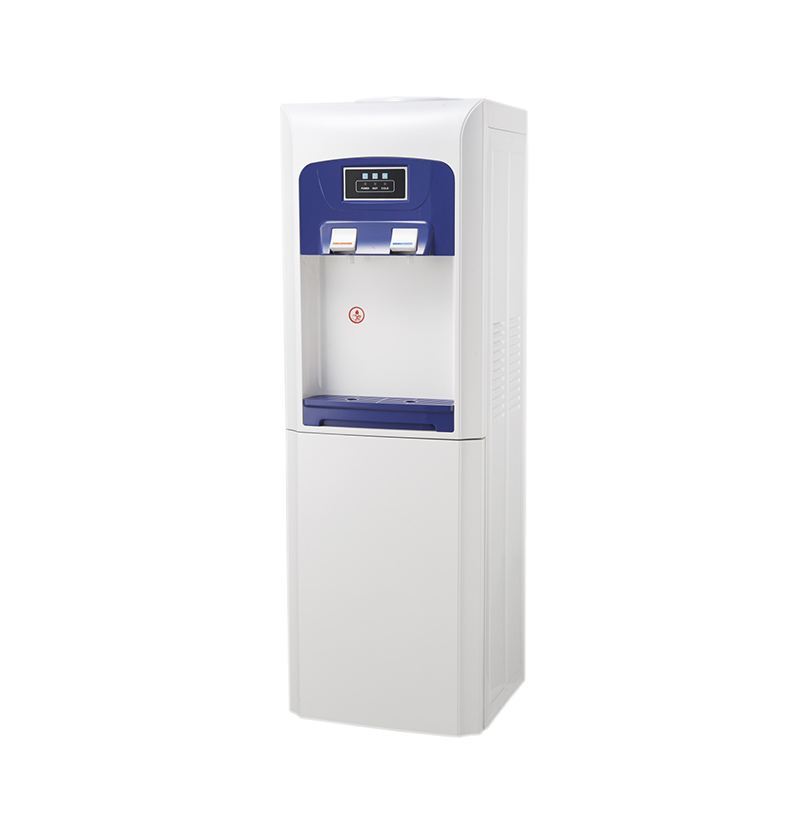 PS-SLR-101 Compressor RO Integrated Water DispenserThis page identifies PS-SLR-101 as a compressor RO integrated machine; key technical details are limited, so verify specifications directly before selecting it.View Product →
Filter life is the other half of the story, because that is where running costs sit. Service intervals are quoted in months or litres, whichever comes first, and they vary sharply by stage:
Chlorine-heavy water shortens carbon life; hard water shortens everything downstream of the sediment stage. Replacement is ultimately driven by throughput and water quality, not by the calendar printed on the label.
How Hot and Cold Water Are Produced
Filtered water is split into two circuits. On the cold side, the two common technologies behave quite differently. Compressor cooling uses a refrigerant cycle, pulls the tank down to around 5 to 10 degrees Celsius, and recovers quickly under continuous draw, which suits an office where twenty people fill bottles before 10 a.m. Thermoelectric (Peltier) cooling is silent, has no compressor, and typically holds water at 10 to 15 degrees Celsius; it is quieter and efficient at small loads, but slower to recover.
On the hot side, a stainless-steel hot tank with an immersed heating tube brings water to 85 to 95 degrees Celsius. A thermostat or electronic controller cycles the element to hold that band, while safety features handle the practical risks: a dry-boil cut-out if the tank empties, an over-temperature fuse, and on models intended for schools and clinics, a child lock on the hot tap. Instant-heating designs skip the hot tank and heat water as it flows, which removes standby losses but limits how much hot water is available in one continuous draw.
Installation, Pressure, and the Maintenance Reality
Installation is usually a two-to-three-hour job: drill the counter or wall for the faucet and tubing, fit a feed valve on the cold line, connect the drain if the unit has RO, flush the new cartridges for ten to fifteen minutes, then test. Nothing about it is exotic, but three site conditions cause most callbacks:
- Inlet pressure outside the rated window, which is why a gauge reading should be taken before ordering, not after.
- No drain point within reach, a hard requirement for RO reject water; RO-free models avoid the constraint entirely.
- Water hardness above roughly 200 mg/L expressed as calcium carbonate, which scales the heating tube and shortens element life unless a softener or scale inhibitor is added.
Ongoing maintenance is simple but not optional: replace sediment and carbon cartridges on schedule, sanitise the internal tank and dispensing nozzles at least twice a year, and check tube joints for weeping. Units with UV lamps need the lamp replaced annually even if it still glows, because UV output decays long before the tube fails visibly.
Bottled, Bottleless, or Countertop: Matching the Setup to the Site
Bottleless water dispensers come in three practical shapes, and the right one depends less on price than on whether a water line and a drain are within reach. The table below compares the options on the factors that actually drive installation cost and daily effort.
| Setup | Water source | Installation | Filtration | Best fit |
|---|---|---|---|---|
| Bottled cooler | Delivered 18.9-litre bottles | None beyond placement | None inside the unit | Low-volume sites with no water line |
| Bottleless point-of-use | Building cold water line | 2 to 3 hours; drain only with RO | 2 to 5 stages, RO, UF, or UV possible | Offices, clinics, and schools with steady demand |
| Countertop bottleless | Same line or manual fill | Under 1 hour; no drain | 1 to 3 stages, usually carbon or UF | Small offices, home kitchens, rented space |
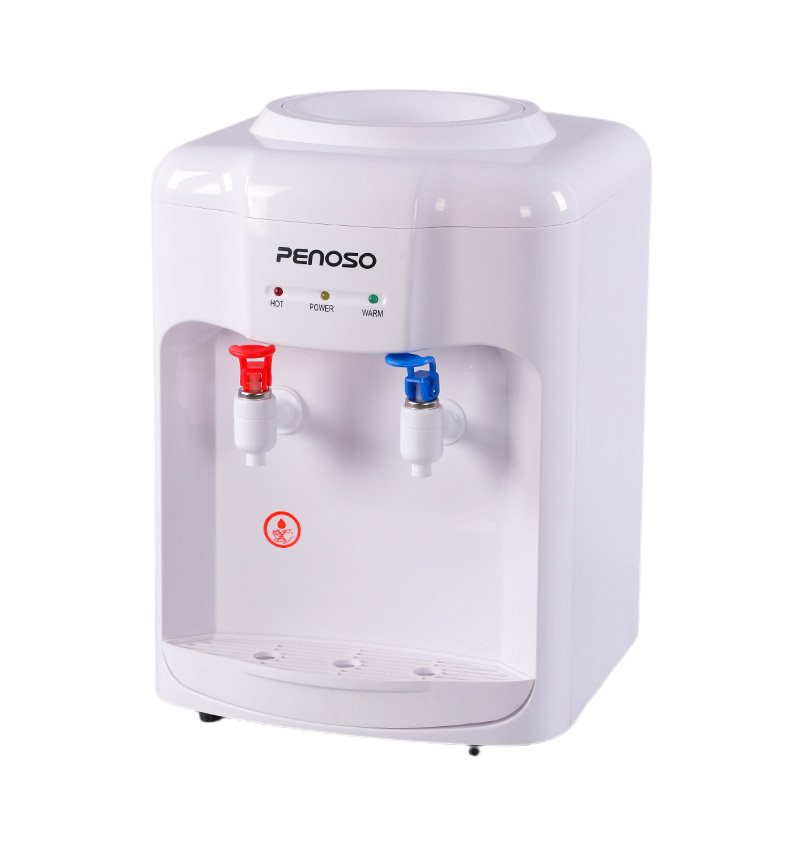 PS-STR-12 Small Desktop Hot and Cold Water DispenserCompact desktop model with electronic cooling and stainless-steel hot tank, suited to home or small spaces where hot and cold drinking water is needed.View Product →
For a leased office or a rented flat, the countertop route avoids drilling and drain work altogether, and it can be relocated when the lease ends. For a factory floor, a clinic, or a school corridor, the point-of-use format pays back through volume: no bottle deliveries, no storage room, and no risk of an empty cooler at the start of a shift.
If you remember one thing, let it be this: a bottleless dispenser is a small water treatment plant with a tap on the front. Judge it by the water path, meaning feed pressure, filtration stages, storage volume, and recovery rate, rather than by the number of buttons on the panel. Ask the supplier for the rated inlet pressure, the micron rating of each stage, the cold-tank recovery time, and the replacement interval for every cartridge. Those four answers predict how the machine will behave in your building far more reliably than any brochure headline.