 English
 عربى
 Português
 Español
Picture this: a 5-gallon bottle arrives at your home. With a traditional top load dispenser, you would have to hoist it above your shoulder and flip it onto the machine neck. A bottom load dispenser removes that struggle entirely. You open the lower cabinet, place the bottle on the floor, push the suction tube in, close the door, and press the tap. Water flows because the machine is not relying on gravity to push the water down; it uses an internal pump to lift water from the bottle into the dispenser's hot and cold reservoirs before delivering it to your cup.
How the Pump and Internal Water Path Work
The core of the system is a small electric pump, usually a diaphragm or piston pump that can run for short intervals without overheating. When the water level in a tank drops, the pump starts automatically. It creates a vacuum on the suction side of the line, which pulls water from the bottle through a tube. The tube has a weighted foot that keeps it near the bottom of the bottle so it can draw the last few litres.
Once water leaves the pump, it passes through a one-way check valve. That valve stops water and steam from traveling backward into the bottle when the machine heats up. After the check valve, the flow splits into two lines: one leads to the hot water tank, the other to the cold water tank. Each tank has its own float switch or level sensor, so the pump only runs when one of them needs refilling.
| Step | Component | Function |
|---|---|---|
| 1 | Bottle | Stores water at the base of the unit |
| 2 | Suction tube | Reaches into the bottle and carries water upward |
| 3 | Pump | Generates enough pressure to lift water from the bottle |
| 4 | Check valve | Allows water to move in one direction only |
| 5 | Tank assembly | Divides water into hot and cold reservoirs |
| 6 | Spout | Delivers the selected temperature to your cup |
The layout may vary from model to model, but the sequence is always the same: bottle, pump, valve, tanks, tap. If a unit includes a filter, the filter cartridge is normally placed between the pump and the tanks, so every litre is treated before the water is heated or chilled.
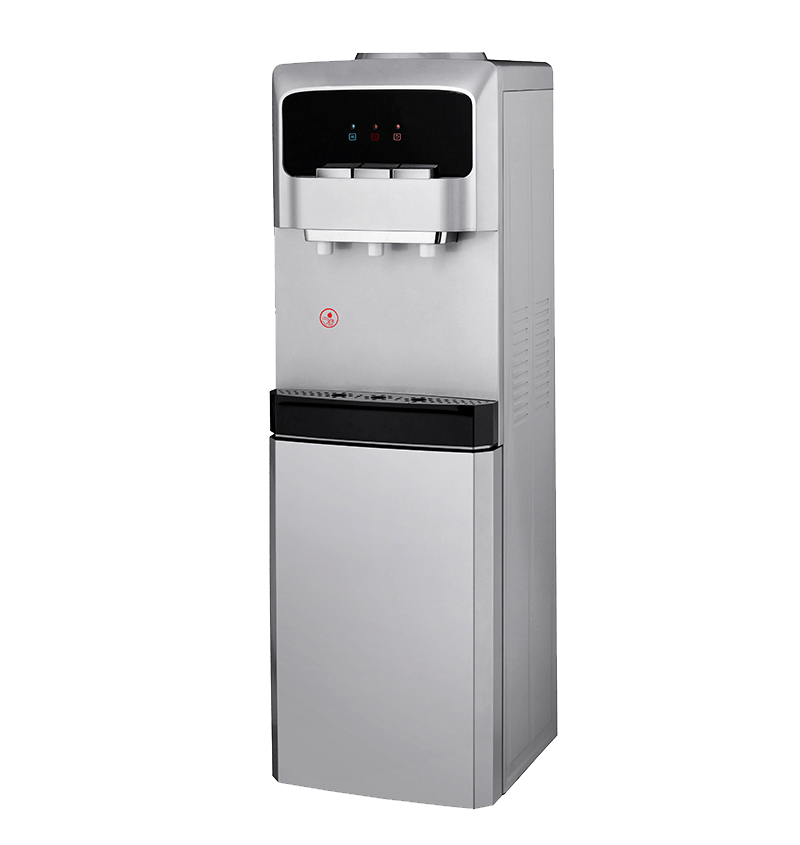
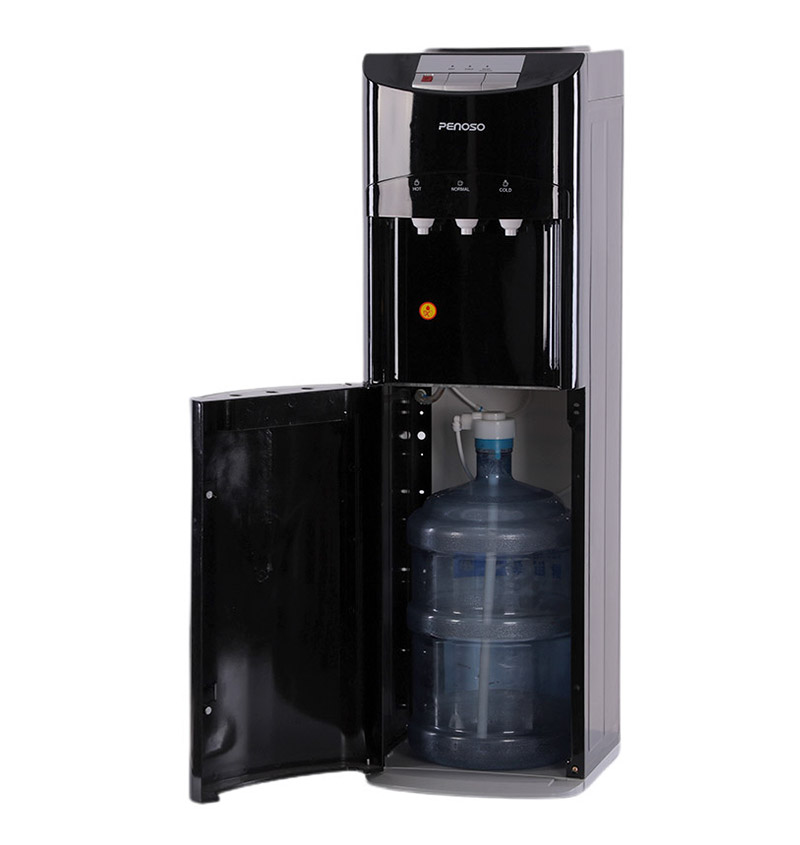 Self-Cleaning Bottom Loading Water Dispenser with Three Temperature SettingsThis model offers hot, cold, and normal water from a bottom-loading bottle, featuring a stainless steel hot tank and self-cleaning function for convenient use.View Product →
Heating: How the Hot Water Side Works
The hot water tank is a small, heavily insulated vessel made of stainless steel or food-grade plastic. A heating element sits at the base, and a thermostat controls the temperature, usually between 185°F and 203°F (85°C to 95°C). When the element runs, the water warms quickly, but the tank also needs a way to handle steam. Most bottom load dispensers include a pressure relief valve that vents excess pressure safely, plus a drip tray to catch condensation. The anti-drip valve also prevents hot water from flowing back into the pump line.
Cooling: How the Cold Water Side Works
For chilled water, the design depends on the cooling technology. Compressor-based models use a small refrigeration circuit similar to a mini fridge. The compressor, condenser coil, and evaporator work together to pull heat out of the cold water tank, keeping the water between roughly 39°F and 50°F (4°C and 10°C). Thermoelectric models use a Peltier device instead. They are quiet and energy-efficient for low-volume use, but they cannot produce the same very cold water in a warm kitchen. In both cases, the pump delivers water to the cold tank, where it stays stored until the tap opens.
Safety Features That Protect the Pump and the User
Because the pump replaces gravity, it also introduces a few failure risks that top load units simply do not have. A dry-run sensor is therefore important: it stops the pump when the bottle is empty or when the suction tube loses its prime. Thermal protection prevents the heating element from overheating if the hot tank runs dry. The electrical system is also grounded and fused to deal with water drips near the pump. On the user side, hot water taps typically have a child safety lock, and the dispensing area has an anti-drip mechanism to keep spillage off the floor.
Bottom Load vs Top Load: How the Mechanics Compare
The practical impact of the pump-based design becomes obvious when you compare the two formats. A top load machine keeps the bottle upside down on top, so water flows down by gravity. That makes the plumbing simple and quiet, but it makes bottle replacement a heavy, awkward task. A bottom load unit moves the bottle down where you can slide it into place, but it relies on a pump to push the water upward. You gain convenience and lose a little quietness.
| Feature | Bottom Load Unit | Top Load Unit |
|---|---|---|
| Bottle position | Inside lower cabinet | Inverted on top of the machine |
| Water delivery | Electric pump | Gravity |
| Effort to replace bottle | Low; slide bottle into place | High; must lift and invert |
| Noise | Low hum during pump operation | Silent when water flows |
| Cold water performance | Same hot/cold tanks; slight delay after refill | Immediate flow from overhead bottle |
| Maintenance | More internal tubing and seals to inspect | Simpler plumbing |
If convenience during bottle changes is the priority, a bottom load water dispenser is worth considering. If you prefer the quietest possible operation and do not mind lifting the bottle, top load models remain a dependable option.
What to Check Before You Buy a Bottom Load Dispenser
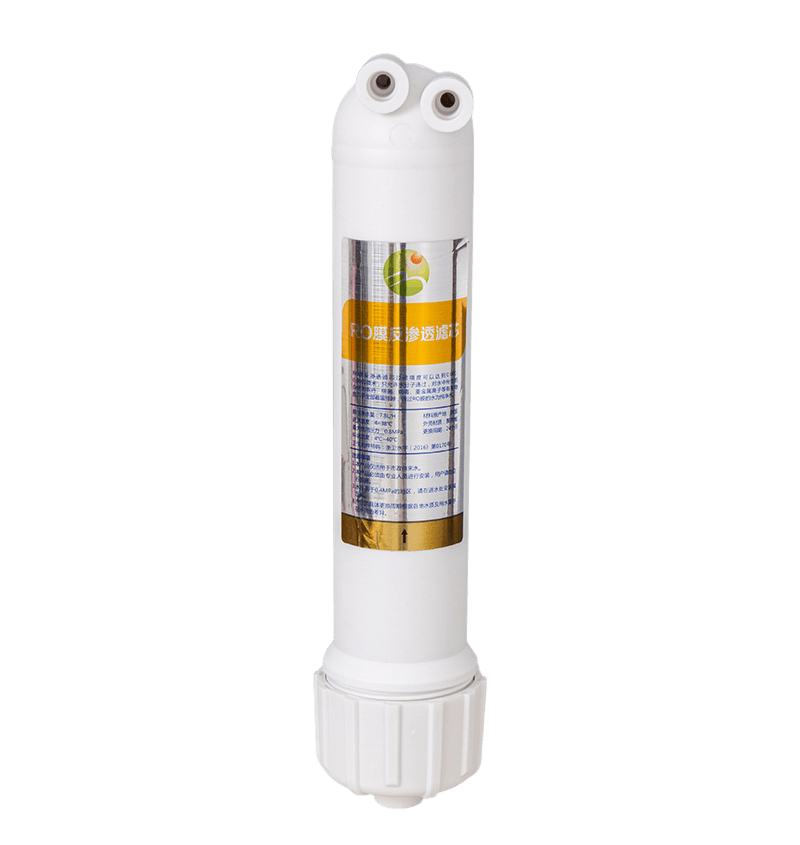
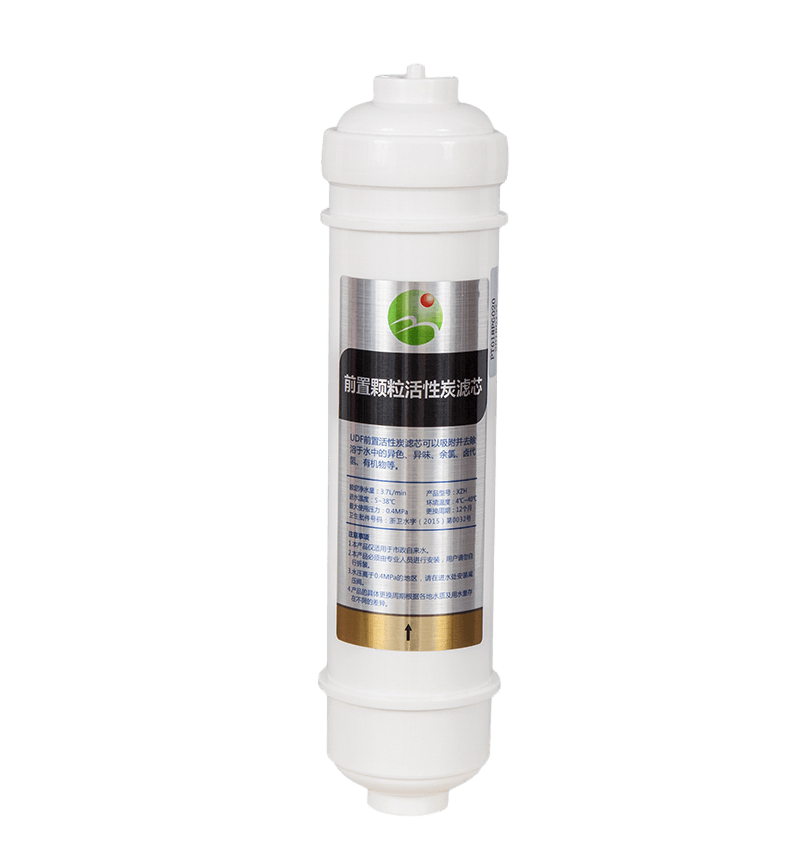
Start with pump noise. A good pump should be audible but faint, not a loud rattling sound after a few weeks of use. Check whether the suction tube is long enough to sit at the bottom of a standard 3-gallon or 5-gallon bottle. Look for a removable drip tray and a way to drain the reservoirs, because you will need to clean the system every few months. If you want better taste, a model with a built-in filter cartridge can be mounted in the water line between the pump and the tanks; just remember that the filter needs regular replacement.
Also compare the materials inside the unit. Stainless steel hot tanks are more durable and easier to sanitize, while cheaper plastic tanks may stain or hold odours. The check valve and pump seals should be made from food-safe silicone or rubber, because they stay in contact with water continuously.
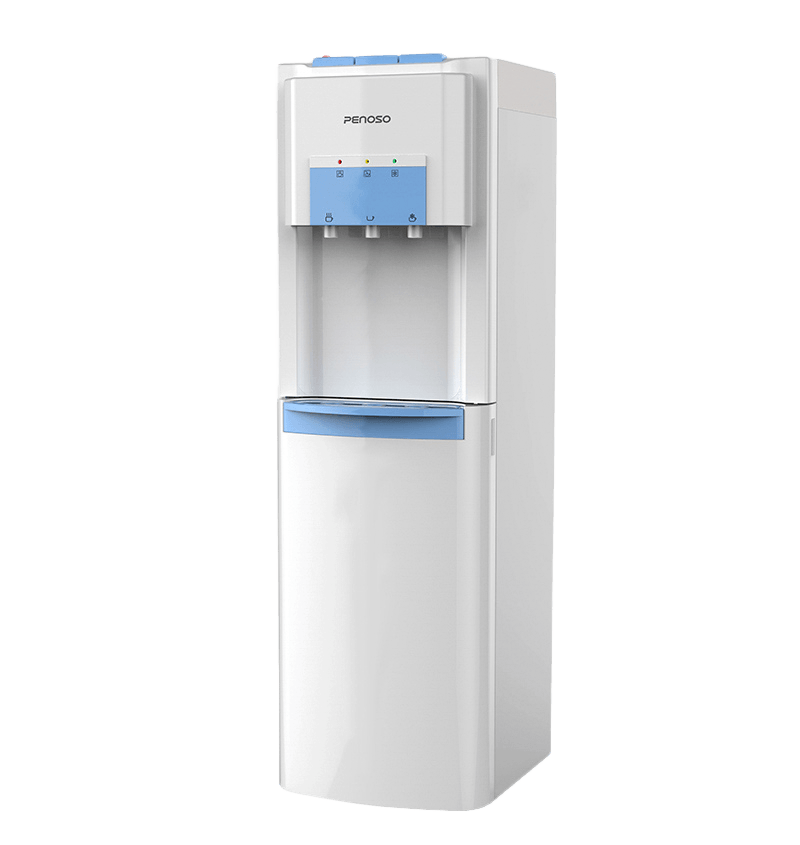 Three Temperature Bottom Loading Hot/Cold Water Dispenser with Child Safety LockA reliable dispenser providing hot, cold, and room-temperature water, with food-grade materials and a child safety lock, ideal for homes and offices.View Product →
Maintenance and Long-Term Reliability
Keep the suction tube and bottle connector clean. A dirty tube is the most common cause of algae or biofilm growth in bottled water dispensers. Use a soft brush and a diluted cleaning solution, then rinse thoroughly. The hot tank can be cleaned with a mixture of water and food-safe descaling agent, especially in areas with hard water. Replace any inline filter at the manufacturer's recommended interval. Finally, listen for changes in pump sound: a sudden increase in noise often means a blocked line or a worn diaphragm.
Final Thoughts
A bottom load water dispenser works because a pump quietly assumes the job your muscles would otherwise do. Once you understand the path from bottle to pump to tank to spout, the benefits—no heavy lifting, steady hot and cold water, and a compact footprint—are much easier to judge. If you are comparing models, look for a clean, accessible layout, a reliable pump, and tanks you can actually clean. The internal mechanism is simple enough to trust, but the details decide how long it lasts.